New Tires vs. Used Tires: Which Is Best for Your Budget?
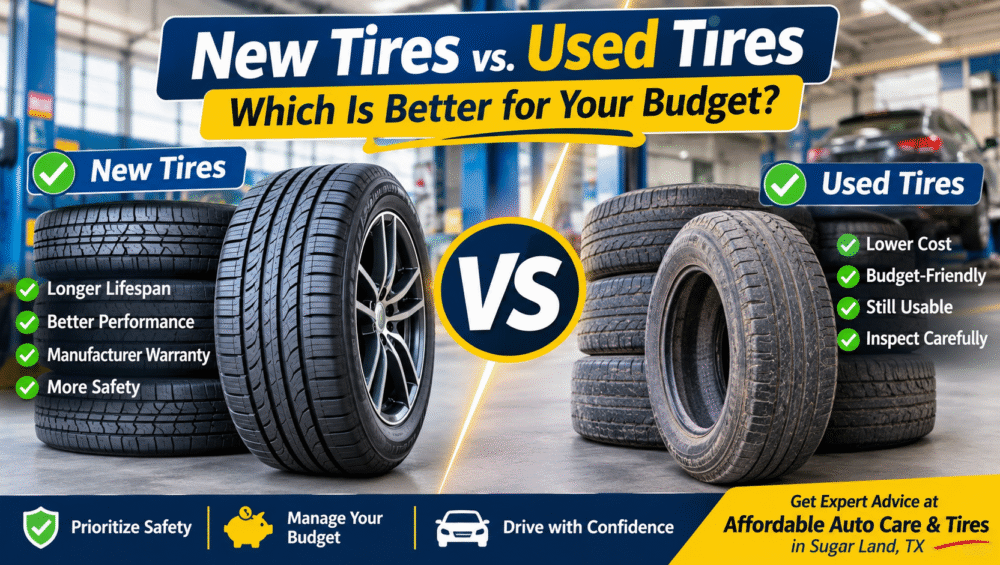
For drivers in Sugar Land, TX, choosing between New Tires vs. Used Tires is not always straightforward. New tires generally offer a longer expected service life, fresh tread, and manufacturer-backed warranty options. Used tires, on the other hand, can provide a more affordable upfront solution when they are properly inspected and still have sufficient tread life.
So, which option is better for your budget?
The answer depends on your vehicle, driving habits, financial situation, and the condition of the tires you are considering. In this guide, we will compare new tires vs. used tires, explain their advantages and disadvantages, highlight important safety factors, and help you decide which option makes the most sense. If you are searching for the Best tire repair shop in Sugar Land, Affordable Auto Care & Tires can help you explore tire options that fit your vehicle and budget.
New Tires vs. Used Tires: What Is the Difference?
What Are New Tires?
New tires are generally a suitable choice for drivers who want a longer expected service life and the confidence of purchasing an unused product.
What Are Used Tires?
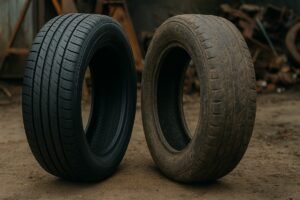
That is why buying used tires requires careful inspection. A low price or attractive appearance does not automatically mean a used tire is safe.
1. New Tires vs. Used Tires: Which Option Costs Less?
2. Advantages of Buying New Tires
Longer Expected Tread Life – Because new tires have not been previously driven on, they begin with their original tread depth. This generally gives drivers more usable tread life compared with a used tire of the same model that has already experienced wear. Actual tire life depends on several factors, including driving habits, road conditions, tire pressure, alignment, rotation frequency, and vehicle condition.
Better Choice for Long-Term Ownership – If you plan to keep your vehicle for several years, investing in new tires may make financial sense. You start with a fresh set and can follow the manufacturer’s maintenance recommendations from the beginning. This makes it easier to monitor tread wear, maintain proper inflation, and plan for future replacement.
Manufacturer Warranty Options – Many new tires include manufacturer warranties, although the terms vary by brand and model. Some may offer limited tread wear warranties, while others provide additional coverage for certain defects or road hazards.
Before purchasing, check:
What the warranty covers.
The mileage or time limitations.
Maintenance requirements.
Exclusions and restrictions.
Whether proof of purchase is required.
More Predictable Tire Condition
3. Advantages of Buying Used Tires
Lower Upfront Cost – The biggest advantage of used tires is their lower purchase price. If one tire is damaged unexpectedly, a suitable used replacement may help reduce the immediate expense. This can be particularly helpful for drivers who need a temporary budget-conscious solution, provided the tire is safe, compatible, and professionally inspected.
Useful Remaining Tread Life – Not every used tire is worn out. Some previously used tires still have a reasonable amount of tread remaining. When properly inspected, these tires may offer additional usable service life at a lower price. However, remaining tread depth alone does not establish safety. Age, internal condition, previous repairs, and sidewall damage also matter.
More Affordable Replacement Options – For older vehicles or cars with limited expected future use, a carefully selected used tire may be worth considering. The key is to make sure the tire matches the vehicle’s requirements and has no conditions that make it unsafe.
Important: Used Tires Are Not All the Same – Two used tires can have very different safety conditions even if they look similar. One may have even tread wear and no visible damage. Another may have hidden internal problems or an unsafe repair. Always ask a qualified tire professional to inspect a used tire before purchasing or installing it.
4. Are Used Tires Safe to Buy?
Tread Depth: The remaining tread should be measured across the tire. In the United States, tires are considered worn out at the minimum legal tread depth of 2/32 of an inch. However, replacement may be advisable before reaching that limit, particularly when wet-road performance is a concern.
Sidewall Condition: Look for cuts, cracks, bulges, punctures, or other visible damage. A tire with a sidewall bulge or serious structural damage should not be used.
Uneven Wear: Irregular tread wear may indicate alignment problems, suspension issues, incorrect inflation, or previous vehicle maintenance concerns.
Manufacturing Date: Check the DOT Tire Identification Number on the sidewall. The final four digits indicate the week and year of manufacture. For example, 2323 indicates the 23rd week of 2023.
Previous Repairs: Ask whether the tire has been repaired and whether the repair is appropriate. Not every puncture or repair is safe for continued use.
Air Pressure and Compatibility: The tire should hold air properly and meet the vehicle’s size, load, and speed requirements. The National Highway Traffic Safety Administration (NHTSA) also recommends monitoring tire pressure, tread condition, physical damage, and signs of aging. If a tire shows signs of damage or unusual performance, have it evaluated by a qualified professional.
5. Which Tires Are Better for Sugar Land’s Driving Conditions?
Hot Texas Weather – High temperatures can increase tire pressure as the air inside the tire heats up. Always follow the vehicle manufacturer’s recommended cold tire pressure rather than relying on the maximum pressure printed on the tire sidewall. Check pressure regularly, especially before longer journeys.
Rain and Wet Roads – Tread helps channel water away from the tire’s contact area, supporting traction on wet surfaces. Worn tread can reduce wet-road grip and increase the risk of losing control. For drivers who regularly travel during rainy weather, choosing tires with sufficient tread depth is particularly important.
Daily Commuting and Highway Driving – If you regularly commute, drive on highways, or travel long distances, new tires may provide better long-term value because they begin with unused tread. If your driving is limited and your budget is restricted, a professionally inspected used tire may be an option when it meets all safety and compatibility requirements.
6. New Tires vs. Used Tires: Which Is Better for Your Budget?
You want the longest expected service life from your purchase.
You drive frequently or cover long distances.
You regularly travel on highways.
You want access to applicable manufacturer warranties.
You plan to keep your vehicle for several years.
Your current tires have significant wear or damage.
Your immediate budget is limited.
You need a lower-cost replacement option.
The tire has sufficient remaining tread.
Its age and physical condition are acceptable.
It has no unsafe structural damage.
It matches your vehicle’s specifications.
A qualified professional has inspected it.

7. How to Save Money When Buying Tires
Know Your Tire Size: Check the driver’s door-jamb label or owner’s manual to identify the recommended tire size and specifications.
Compare Complete Prices: Ask whether the quote includes mounting, balancing, valve stems, disposal fees, and applicable taxes.
Check Tire Pressure Monthly: Correct inflation helps reduce uneven wear and supports proper handling.
Rotate Tires Regularly: Follow your vehicle manufacturer’s recommended rotation schedule.
Check Wheel Alignment: If your vehicle pulls to one side or tires wear unevenly, have the alignment inspected.
Inspect Tread and Sidewalls: Regular checks can help identify problems before they become more serious.
Avoid Buying Based on Price Alone: A cheap tire may become an expensive decision if it has limited remaining life or hidden damage. Small maintenance habits can help you get better value from your tire investment.
8. Where to Find Affordable New and Used Tires in Sugar Land, TX?
Why consider Affordable Auto Care & Tires?
New tire options from recognised brands.
Carefully selected and inspected used tire options.
Professional tire mounting and balancing.
Assistance with tire size and compatibility.
Budget-conscious tire solutions.
A local, family-owned automotive service business.
Additional vehicle maintenance and repair services.
Frequently Asked Questions (FAQs)
New tires are generally better for long-term use because they have unused tread and a more predictable condition. Used tires may be suitable when they have sufficient tread, acceptable age, no unsafe damage, and have passed a professional inspection.
2. Are used tires worth buying to save money?
Used tires can be worth considering when the price is lower and the tire is in good condition. However, check tread depth, manufacturing date, sidewall condition, previous repairs, and compatibility before purchasing.
3. How long do used tires usually last?
There is no fixed lifespan for used tires. Their remaining service life depends on previous usage, tread depth, manufacturing age, storage conditions, damage, and maintenance. Have them inspected before installation.
4. What is the minimum safe tire tread depth?
The minimum legal tread depth for passenger vehicle tires in the United States is generally 2/32 of an inch. NHTSA advises replacing tires when they reach this level. Drivers may need to replace tires earlier depending on wear and driving conditions.
5. How can I check the age of a tire?
Look for the DOT Tire Identification Number on the tire sidewall. Its final four digits identify the manufacturing week and year. For example, 2323 means the tire was manufactured during the 23rd week of 2023.
6. Should I replace all four tires at once?
Replacing all four tires can help maintain consistent handling and traction, particularly on vehicles with all-wheel-drive systems. However, the correct replacement approach depends on the vehicle manufacturer’s recommendations, tire condition, and tread-depth differences.
7. Can I replace just one tire?
Sometimes, yes. However, the replacement tire should match the required size and specifications, and differences in tread depth may affect handling or drivetrain performance. Check your owner’s manual and consult a tire professional before replacing only one tire.
8. Where can I buy affordable tires in Sugar Land, TX?
Affordable Auto Care & Tires offers new and used tire options in Sugar Land, TX. Visit the shop or call 713-219-9472 to ask about tire availability, sizing, installation, and pricing.
Final Verdict: New Tires or Used Tires – Which Should You Choose?
The most important thing is to balance your budget with your safety. Before making a decision, compare the total cost, inspect the tire condition, confirm the correct specifications, and ask a qualified tire professional for advice.
Looking for affordable tire solutions in Sugar Land, TX?

Visit Affordable Auto Care & Tires to explore new and used tire options and get help choosing a suitable solution for your vehicle.
Affordable Auto Care & Tires
Address: 13510 West Bellfort Ave, Sugar Land, TX 77498
Phone: 713-219-9472
Website: https://autocareandtire.com/