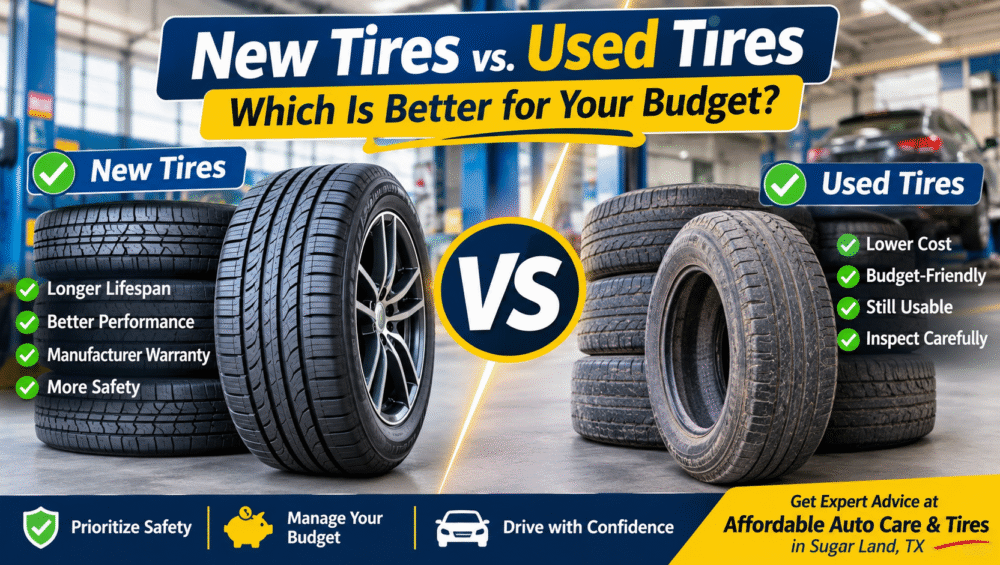
New Tires vs. Used Tires: Which one is Best?
New Tires vs. Used Tires: Which Is Best for Your Budget? New Tires vs. Used Tires – Are new tires worth the extra money, or can used tires provide the same value for less? If you are shopping for replacement tires, this is one of the most important questions to consider. The right choice can affect your budget, driving comfort, vehicle performance, and most importantly, your safety on the road. For drivers in Sugar Land, TX, choosing between New Tires vs. Used Tires is not always straightforward. New tires generally offer a longer expected service life, fresh tread, and manufacturer-backed warranty options. Used tires, on the other hand, can provide a more affordable upfront solution when they are properly inspected and still have sufficient tread life. So, which option is better for your budget? The answer depends on your vehicle, driving habits, financial situation, and the condition of the tires you are considering. In this guide, we will compare new tires vs. used tires, explain their advantages and disadvantages, highlight important safety factors, and help you decide which option makes the most sense. If you are searching for the Best tire repair shop in Sugar Land, Affordable Auto Care & Tires can help you explore tire options that fit your vehicle and budget. New Tires vs. Used Tires: What Is the Difference? Before comparing prices, it is important to understand what separates new tires from used tires. What Are New Tires? New tires are unused tires that have not previously been installed or driven on. They come with their original tread depth and are available in different sizes, designs, performance categories, and brands. Depending on the tire manufacturer and product, new tires may include a limited tread wear warranty, workmanship coverage, or other manufacturer-backed protections. New tires are generally a suitable choice for drivers who want a longer expected service life and the confidence of purchasing an unused product. What Are Used Tires? Used tires are previously installed tires that are being resold after use. They may come from vehicles that have been traded in, upgraded, or had their tires replaced for reasons unrelated to complete tread wear. The condition of used tires can vary considerably. Some may have substantial tread remaining, while others may have uneven wear, hidden damage, repairs, or significant aging. That is why buying used tires requires careful inspection. A low price or attractive appearance does not automatically mean a used tire is safe. 1. New Tires vs. Used Tires: Which Option Costs Less? For most drivers, the first consideration is price. Used tires generally cost less upfront than comparable new tires. This makes them attractive to drivers who need an immediate replacement but have a limited budget. New tires usually require a higher initial investment. However, they may provide more usable tread life, depending on the tire model, road conditions, driving habits, and maintenance. 2. Advantages of Buying New Tires New tires are often the preferred option for drivers who prioritise long-term value, performance, and predictable tire condition. Here are some of their biggest advantages. Longer Expected Tread Life – Because new tires have not been previously driven on, they begin with their original tread depth. This generally gives drivers more usable tread life compared with a used tire of the same model that has already experienced wear. Actual tire life depends on several factors, including driving habits, road conditions, tire pressure, alignment, rotation frequency, and vehicle condition. Better Choice for Long-Term Ownership – If you plan to keep your vehicle for several years, investing in new tires may make financial sense. You start with a fresh set and can follow the manufacturer’s maintenance recommendations from the beginning. This makes it easier to monitor tread wear, maintain proper inflation, and plan for future replacement. Manufacturer Warranty Options – Many new tires include manufacturer warranties, although the terms vary by brand and model. Some may offer limited tread wear warranties, while others provide additional coverage for certain defects or road hazards. Before purchasing, check: What the warranty covers. The mileage or time limitations. Maintenance requirements. Exclusions and restrictions. Whether proof of purchase is required. More Predictable Tire Condition New tires have no previous driving history, which removes uncertainty about how they were used or maintained. This does not mean new tires are automatically suitable for every vehicle. You still need the correct size, load rating, speed rating, and tire type. 3. Advantages of Buying Used Tires Used tires can be a practical alternative when the budget is tight. However, the savings are worthwhile only when the tire’s condition is acceptable. Lower Upfront Cost – The biggest advantage of used tires is their lower purchase price. If one tire is damaged unexpectedly, a suitable used replacement may help reduce the immediate expense. This can be particularly helpful for drivers who need a temporary budget-conscious solution, provided the tire is safe, compatible, and professionally inspected. Useful Remaining Tread Life – Not every used tire is worn out. Some previously used tires still have a reasonable amount of tread remaining. When properly inspected, these tires may offer additional usable service life at a lower price. However, remaining tread depth alone does not establish safety. Age, internal condition, previous repairs, and sidewall damage also matter. More Affordable Replacement Options – For older vehicles or cars with limited expected future use, a carefully selected used tire may be worth considering. The key is to make sure the tire matches the vehicle’s requirements and has no conditions that make it unsafe. Important: Used Tires Are Not All the Same – Two used tires can have very different safety conditions even if they look similar. One may have even tread wear and no visible damage. Another may have hidden internal problems or an unsafe repair. Always ask a qualified tire professional to inspect a used tire before purchasing or installing it. 4. Are Used Tires Safe to Buy? Yes, used tires can be suitable in certain circumstances, but only when they are