Autocareandtire

Call us

713-219-9472‬

Mon-Fri 8am-6pm

Saturday 8am-2pm

Auto Care & Tire

Schedule an online appointment

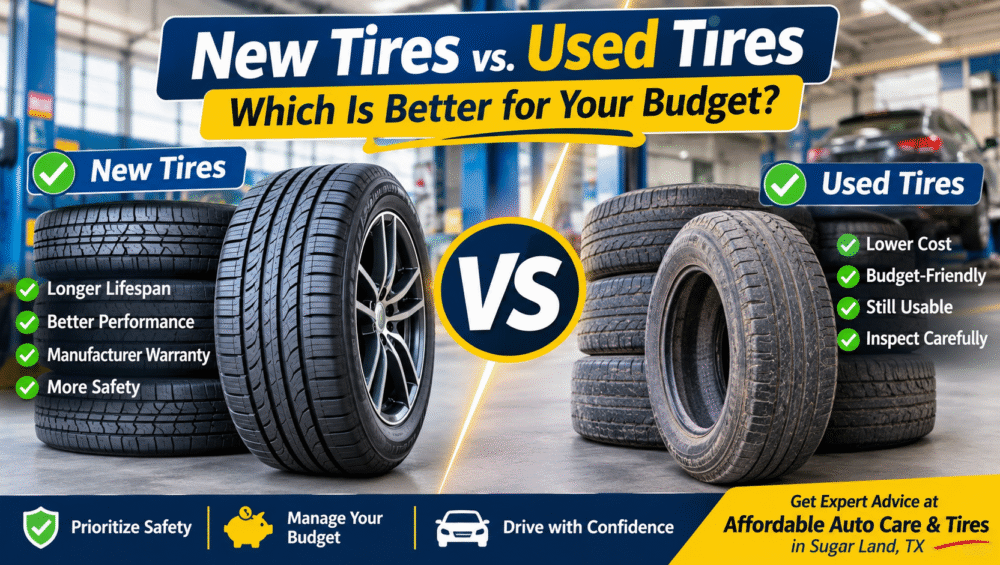
    New Tires vs. Used Tires

    New Tires vs. Used Tires: Which one is Best?

    New Tires vs. Used Tires: Which Is Best for Your Budget?  New Tires vs. Used Tires – Are new tires worth the extra money, or can used tires provide the same value for less? If you are shopping for replacement tires, this is one of the most important questions to consider. The right choice can affect your budget, driving comfort, vehicle performance, and most importantly, your safety on the road. For drivers in Sugar Land, TX, choosing between New Tires vs. Used Tires is not always straightforward. New tires generally offer a longer expected service life, fresh tread, and manufacturer-backed warranty options. Used tires, on the other hand, can provide a more affordable upfront solution when they are properly inspected and still have sufficient tread life. So, which option is better for your budget? The answer depends on your vehicle, driving habits, financial situation, and the condition of the tires you are considering. In this guide, we will compare new tires vs. used tires, explain their advantages and disadvantages, highlight important safety factors, and help you decide which option makes the most sense. If you are searching for the Best tire repair shop in Sugar Land, Affordable Auto Care & Tires can help you explore tire options that fit your vehicle and budget. New Tires vs. Used Tires: What Is the Difference? Before comparing prices, it is important to understand what separates new tires from used tires. What Are New Tires? New tires are unused tires that have not previously been installed or driven on. They come with their original tread depth and are available in different sizes, designs, performance categories, and brands. Depending on the tire manufacturer and product, new tires may include a limited tread wear warranty, workmanship coverage, or other manufacturer-backed protections. New tires are generally a suitable choice for drivers who want a longer expected service life and the confidence of purchasing an unused product. What Are Used Tires? Used tires are previously installed tires that are being resold after use. They may come from vehicles that have been traded in, upgraded, or had their tires replaced for reasons unrelated to complete tread wear. The condition of used tires can vary considerably. Some may have substantial tread remaining, while others may have uneven wear, hidden damage, repairs, or significant aging. That is why buying used tires requires careful inspection. A low price or attractive appearance does not automatically mean a used tire is safe. 1. New Tires vs. Used Tires: Which Option Costs Less? For most drivers, the first consideration is price. Used tires generally cost less upfront than comparable new tires. This makes them attractive to drivers who need an immediate replacement but have a limited budget. New tires usually require a higher initial investment. However, they may provide more usable tread life, depending on the tire model, road conditions, driving habits, and maintenance. 2. Advantages of Buying New Tires New tires are often the preferred option for drivers who prioritise long-term value, performance, and predictable tire condition. Here are some of their biggest advantages. Longer Expected Tread Life – Because new tires have not been previously driven on, they begin with their original tread depth. This generally gives drivers more usable tread life compared with a used tire of the same model that has already experienced wear. Actual tire life depends on several factors, including driving habits, road conditions, tire pressure, alignment, rotation frequency, and vehicle condition. Better Choice for Long-Term Ownership – If you plan to keep your vehicle for several years, investing in new tires may make financial sense. You start with a fresh set and can follow the manufacturer’s maintenance recommendations from the beginning. This makes it easier to monitor tread wear, maintain proper inflation, and plan for future replacement. Manufacturer Warranty Options – Many new tires include manufacturer warranties, although the terms vary by brand and model. Some may offer limited tread wear warranties, while others provide additional coverage for certain defects or road hazards. Before purchasing, check: What the warranty covers. The mileage or time limitations. Maintenance requirements. Exclusions and restrictions. Whether proof of purchase is required. More Predictable Tire Condition New tires have no previous driving history, which removes uncertainty about how they were used or maintained. This does not mean new tires are automatically suitable for every vehicle. You still need the correct size, load rating, speed rating, and tire type. 3. Advantages of Buying Used Tires Used tires can be a practical alternative when the budget is tight. However, the savings are worthwhile only when the tire’s condition is acceptable. Lower Upfront Cost – The biggest advantage of used tires is their lower purchase price. If one tire is damaged unexpectedly, a suitable used replacement may help reduce the immediate expense. This can be particularly helpful for drivers who need a temporary budget-conscious solution, provided the tire is safe, compatible, and professionally inspected. Useful Remaining Tread Life – Not every used tire is worn out. Some previously used tires still have a reasonable amount of tread remaining. When properly inspected, these tires may offer additional usable service life at a lower price. However, remaining tread depth alone does not establish safety. Age, internal condition, previous repairs, and sidewall damage also matter. More Affordable Replacement Options – For older vehicles or cars with limited expected future use, a carefully selected used tire may be worth considering. The key is to make sure the tire matches the vehicle’s requirements and has no conditions that make it unsafe. Important: Used Tires Are Not All the Same – Two used tires can have very different safety conditions even if they look similar. One may have even tread wear and no visible damage. Another may have hidden internal problems or an unsafe repair. Always ask a qualified tire professional to inspect a used tire before purchasing or installing it. 4. Are Used Tires Safe to Buy? Yes, used tires can be suitable in certain circumstances, but only when they are

    Are Used Tires Safe?

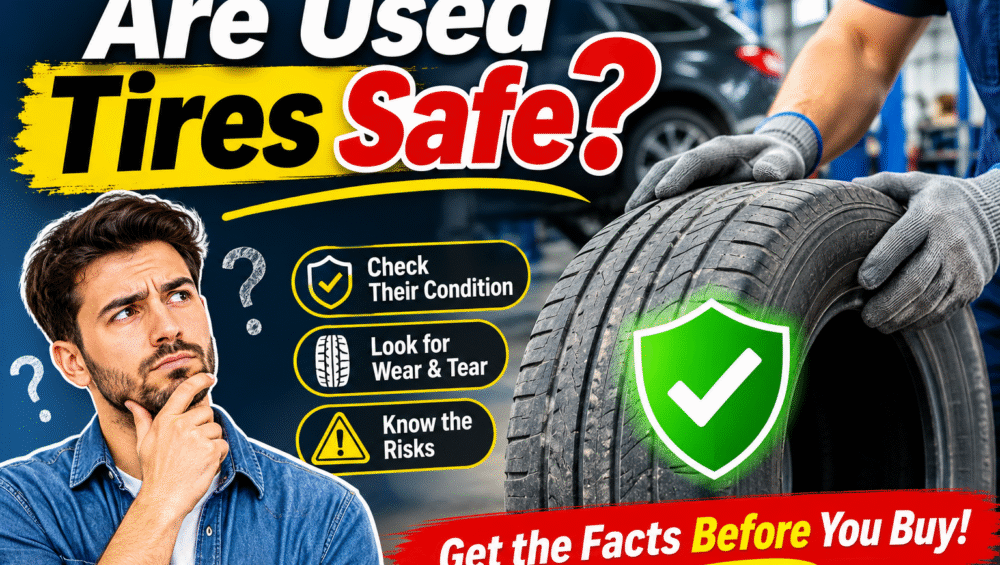
    Are Used Tires Safe?

    Are Used Tires Safe? Question is that, Are Used Tires Safe? Buying new tires can be expensive, especially when you need to replace one or more tires unexpectedly. Whether you have noticed worn-out tread, experienced a flat tire, or simply need a more affordable replacement, used tires may seem like an attractive option. But there is one important question every driver should ask before making a purchase: Are used tires safe? The answer is that some used tires may be suitable for continued use, but others can have hidden damage that makes them dangerous. Question Again that, Are Used Tires Safe? A tire may look perfectly fine from the outside while having internal structural problems, previous damage, or an unsafe repair. That is why choosing the right tire shop matters. If you are searching for the best tire repair shop in Sugar Land, it is important to find a professional team that understands tire safety, carefully evaluates tire condition, and helps you choose the right replacement for your vehicle. At Affordable Auto Care & Tires, we understand that drivers want affordable tire solutions without compromising safety. In this guide, we explain when used tires may be appropriate, what warning signs to look for, how to inspect a used tire, and how to make a smarter tire-buying decision. Are Used Tires Safe? – Affordable Auto Care & Tire  Used tires can be suitable for some vehicles if they are carefully selected, professionally inspected, compatible with the vehicle, and free from unsafe damage. However, not every used tire is safe to install. Unlike a new tire, a used tire has a previous history. It may have been driven on rough roads, exposed to excessive heat, operated under incorrect air pressure, repaired improperly, or stored in unsuitable conditions. Some of these problems are difficult to identify through a simple visual inspection. The U.S. Tire Manufacturers Association (USTMA) warns that used tires can have hidden damage and recommends against installing used tires with certain unsafe conditions, including internal damage, bead damage, bulges, exposed tire material, and punctures or other penetrations. This means you should never purchase a used tire based only on its appearance or remaining tread. A professional inspection is essential before installation. Why Do Drivers Buy Used Tires? Used tires are popular among budget-conscious drivers because they can offer a lower initial purchase price than new tires. For example, if one tire becomes damaged unexpectedly, a used replacement may appear to be a more affordable way to get the vehicle back on the road. Here are some reasons drivers consider used tires: 1. Lower Initial Cost – One of the biggest advantages of used tires is their potentially lower purchase price. Drivers who are working with a limited budget may find them more accessible than buying a complete set of new tires. 2. Temporary Replacement Option – Depending on the tire’s condition and suitability, a used tire may be considered when a driver needs a replacement while managing immediate expenses. It should not be treated as a safe temporary solution unless a qualified professional confirms that it is suitable for use. 3. More Affordable Tire Choices – Some tire shops offer different used tire sizes and brands, giving customers additional options based on their vehicle and budget. 4. Less Immediate Spending – If a vehicle needs replacement tires sooner than expected, a suitable used tire may reduce the immediate financial burden. However, the lowest price should never be the only deciding factor. A damaged or unsuitable tire can create safety risks and additional expenses. The smartest purchase is not simply the cheapest tire. It is a tire that is appropriate for your vehicle and safe for the road. 9 Things to Check Before Buying Used Tires If you are considering used tires, there are several important factors to evaluate before allowing them to be installed.   1. Check the Tire Tread Depth – Tread depth is one of the most important indicators of tire condition. Tire tread creates the grip needed to maintain traction on the road. It helps channel water away from the contact area, supporting vehicle control in wet conditions. As the tread wears down, a tire’s ability to maintain traction can decrease, particularly on wet roads. In the United States, tires should be replaced when tread depth reaches 2/32 of an inch. This is the commonly recognised minimum replacement threshold.However, just because a used tire has slightly more than 2/32 of an inch remaining does not automatically make it a good purchase. A tire with very little tread remaining may need replacement soon. Before purchasing, ask the tire professional to measure tread depth at multiple points across the tire. Check for: Uneven tread depth. Excessive wear on the inner or outer edges. Bald areas. Unusually smooth sections. Visible tread separation. Treadwear indicators that are level with the tread surface. Pro tip: Do not judge a used tire by looking at its tread from a distance. Ask for an actual tread-depth measurement. 2. Inspect the Sidewalls for Cracks, Cuts, and Bulges – The sidewall is an important structural part of a tire. It flexes as the tire rotates and supports the vehicle under changing driving conditions. Damage to this area can compromise tire integrity. Before purchasing a used tire, look carefully for: Visible cracks. Deep cuts. Bulges or bubbles. Exposed cords or body material. Impact damage. Unusual deformation. Signs of deterioration from aging. A bulge in the sidewall can indicate internal structural damage. A tire with this condition should not be installed. Likewise, significant cracks or cuts may indicate that the tire is no longer suitable for safe driving. If you notice any of these warning signs, ask a qualified tire technician to evaluate the tire. Do not assume that a tire is safe simply because it holds air. 3. Check the Tire’s Age and Manufacturing Date – Tires do not remain in the same condition forever. Even when a tire has sufficient tread, aging can affect its rubber

    10 Things Every Driver Should Know

    Best 10 Things Every Driver Should Know

    Best 10 Things Every Driver Should Know Looking for the best vehicle repair shop in Sugar Land, TX? Lets See the, Best 10 Things Every Driver Should Know in the real life. Choosing the right mechanic can make a significant difference in your vehicle’s safety, performance, and long-term maintenance costs. Whether you need a routine oil change, brake repair, tire replacement, engine diagnostics, or more complicated automotive work, finding a reliable auto repair shop is essential. With so many auto repair shops available, how do you know which one deserves your trust? The best choice is not necessarily the shop offering the lowest price or the fastest service. It is a repair facility that combines experienced technicians, transparent pricing, quality parts, modern diagnostic equipment, dependable warranties, and excellent customer service. If you are searching online for the best vehicle repair shop in Sugar Land, this guide will help you understand what to look for, which questions to ask, and how to avoid common repair mistakes. At Affordable Auto Care & Tires, we believe vehicle maintenance should be straightforward, affordable, and stress-free. Here is what every Sugar Land driver should consider before choosing an automotive repair shop. Why Choosing the Right Auto Repair Shop Matters? – 10 Things Every Driver Should Know Your vehicle is an important part of your everyday life. You depend on it for commuting, shopping, family transportation, and weekend travel. When something goes wrong, you need a repair shop that can identify the problem accurately and recommend the right solution. Choosing an inexperienced or unreliable mechanic may result in unnecessary repairs, repeated breakdowns, unexpected expenses, and avoidable safety risks. A dependable auto repair shop helps you: Maintain your vehicle’s safety and reliability. Identify mechanical problems before they become more expensive. Extend the life of important vehicle components. Reduce unexpected repair expenses through preventive maintenance. Improve driving comfort and vehicle performance. Make informed decisions about repairs and replacement parts. For drivers in Sugar Land, selecting a trusted local automotive service provider can also make routine maintenance and future repairs more convenient. 10 Things Every Driver Should Know When Choosing the Best Vehicle Repair Shop in Sugar Land 1. Check the Shop’s Experience and Reputation – Experience is one of the first things to consider when comparing auto repair shops. A repair facility that has served local drivers for several years may have valuable experience diagnosing and repairing different vehicle problems. However, years in business should not be your only deciding factor. Look at the shop’s reputation, customer feedback, service quality, and ability to communicate clearly. Before scheduling an appointment, ask yourself: How long has the shop been providing automotive services? Does it have experience with your vehicle’s make and model? Do customers mention reliable workmanship? Does the business respond professionally to customer concerns? Are its services clearly explained? Online reviews can provide useful insight into real customer experiences. Look for consistent comments about honesty, communication, repair quality, and fair pricing rather than relying on one positive or negative review. A reputable auto repair shop in Sugar Land, TX should be comfortable explaining its experience and the services it provides. 2. Look for Qualified and Experienced Technicians – Modern vehicles contain advanced electrical systems, computerised components, sensors, and sophisticated engine technology. Diagnosing these systems correctly requires appropriate training, experience, and equipment. When choosing a vehicle repair shop, ask about the qualifications of its technicians. For example, ASE certification is a recognised professional credential in the automotive repair industry. It can help customers identify technicians who have demonstrated relevant knowledge and skills through testing and experience requirements. You should also consider whether the shop has experience with the specific repair your vehicle needs. A qualified technician should be able to: Diagnose mechanical and electrical problems. Explain the cause of a vehicle issue. Recommend suitable repair options. Use appropriate diagnostic equipment. Follow vehicle manufacturer service recommendations. Explain when additional inspection is necessary. The goal is not simply to find someone who can replace a damaged component. It is to find a professional who can identify why the problem occurred and recommend an appropriate repair. 3. Choose a Shop That Offers Transparent Pricing – Unexpected repair bills are frustrating, especially when you do not understand what you are paying for. One of the most important characteristics of a trustworthy auto mechanic is transparent pricing. Before approving any repair, request a written estimate that explains the expected costs. The estimate should clearly identify labour charges, parts, additional services, and any applicable fees. Ask these questions before giving approval: What is causing the problem? Which repairs are necessary? What parts will be installed? How much will labour cost? Are there additional charges? Will you contact me before performing extra work? A professional repair shop should explain the difference between urgent repairs and services that can be scheduled for a later date. Be cautious of unusually low estimates that do not explain what is included. A cheaper quote may exclude important components or additional labour. When comparing prices, evaluate the complete repair, not just the initial number. Remember: Affordable auto repair should mean fair pricing and dependable workmanship – not cutting corners on safety or quality. 4. Make Sure the Shop Provides the Services You Need – Not every automotive repair facility offers the same services. Some specialise in tires, while others focus on engine repairs, brakes, electrical systems, or routine maintenance. Choosing a shop that provides multiple automotive services can make vehicle ownership more convenient. Depending on your vehicle’s needs, look for services such as: Engine Repair and Diagnostics: Professional diagnostics can help identify warning lights, unusual engine noises, performance issues, and other mechanical problems. Brake Repair: Brake inspections and repairs help maintain proper stopping performance. Squeaking, grinding, vibration, or changes in braking response should be checked promptly. Oil and Filter Changes: Regular oil changes help protect engine components and maintain proper lubrication. Tire Services: Tire inspections, replacements, and other tire-related services help support safe handling and road performance. Car AC Repair: Air

    Car breakdown help in Sugar Land TX with driver checking vehicle

    Car Breakdown Help in Sugar Land, TX: What to Do When Your Vehicle Won’t Start

      There’s nothing quite like the sinking feeling of turning your key and hearing… nothing. Or worse, being halfway down Highway 6 when your dashboard suddenly lights up like a Christmas tree and your engine starts making a sound you’ve never heard before. If you’re a driver in Sugar Land, Texas, car trouble doesn’t wait for a convenient time, and knowing where to turn for real car breakdown help can save you hours of stress, a tow bill you didn’t budget for, or worse, getting stranded somewhere unsafe. At Affordable Auto Care and Tires, we’ve spent years helping Sugar Land drivers get back on the road quickly and safely. Whether it’s a dead battery outside the Fort Bend Town Center, a flat tire on University Boulevard, or an engine that just won’t turn over after a long day at work, we understand that a breakdown isn’t just an inconvenience. It disrupts your whole day, your commute, your ability to pick up your kids, and sometimes your peace of mind. This guide walks you through what causes most breakdowns, what you should do in the moment, and how to find dependable car breakdown help right here in Sugar Land, TX. When You Need Car Breakdown Help in Sugar Land, TX Sugar Land is a great place to live and drive, with easy access to Houston, well-maintained roads, and a growing community. Still, no matter where you live, cars need care, and certain everyday factors here can speed up wear on batteries, cooling systems, and belts if maintenance gets pushed off. Warm months bring extra demand on your vehicle, and regular stop-and-go commuting on roads like US-59 and the Grand Parkway adds to normal wear over time. That’s exactly why knowing where to turn for reliable car breakdown help in Sugar Land matters, so a small issue never turns into a stressful day on the roadside. Older vehicles tend to feel this more, but even newer cars aren’t immune. A battery approaching the three-to-five-year mark can fail without warning, especially after sitting in a hot parking lot all day. A cooling system that you haven’t flushed in a while can struggle to keep up during peak summer temperatures. And tires that look fine on the surface can develop weak spots that finally give out on a rough patch of road. None of this means anything is wrong with driving in Sugar Land, it just means a little proactive maintenance goes a long way here. Common Causes of Roadside Breakdowns Understanding what typically causes a breakdown can help you catch warning signs before you’re stuck on the shoulder of the road. Dead or dying battery – This is by far the most common reason drivers need car breakdown help. Corroded terminals, an old battery, or simply leaving your headlights on can leave you stranded in a parking lot or driveway. Overheating engine – Low coolant, a failing water pump, or a cracked hose can cause your temperature gauge to spike, especially during Sugar Land’s brutal summer months. Flat or blown tire – Road debris, potholes, and worn tread all contribute to sudden tire failure, often at the worst possible time. Alternator failure – If your battery keeps dying even after a jump, the alternator may not be charging it properly, and that’s a repair, not a quick fix. Fuel system issues – Running low on gas, a clogged fuel filter, or a failing fuel pump can leave your engine sputtering or refusing to start altogether. Transmission trouble – Slipping gears, unusual noises, or a car that won’t shift properly are signs that signs you shouldn’t ignore, since they often get worse quickly. What to Do the Moment Your Car Breaks Down If your vehicle breaks down while driving, your first priority is safety, not the car itself. Get off the road safely – Use your turn signal, ease onto the shoulder or into a nearby parking lot, and put on your hazard lights immediately. Stay visible – If it’s dark or you’re on a busy road like Highway 90A, consider setting up reflective triangles if you have them. Stay inside your vehicle – if you’re on a high-traffic road, especially at night. It’s safer than standing outside near moving traffic. Call for help – Whether that’s roadside assistance, a tow truck, or a trusted local shop, don’t try to diagnose or fix a serious issue yourself on the side of the road. Note your symptoms – Did you hear a noise before it happened? Was there smoke, a burning smell, or a warning light? This information helps a technician diagnose the issue faster once your car arrives at the shop. Finding Reliable Car Breakdown Help in Sugar Land, TX Not every repair shop can handle… well emergency situations, and not every mechanic will be upfront about what’s actually wrong with your car. When you’re already having a stressful day, the last thing you need is a shop that overcharges or takes days to diagnose a simple issue. At Affordable Auto Care and Tires, we prioritize honest, fast diagnostics so Sugar Land drivers aren’t left guessing. Our technicians are familiar with the specific wear-and-tear patterns common to this area, from AC systems working overtime in July to batteries that give out after a cold snap in January. We know that when your car breaks down, you’re not just looking for a repair. You’re looking for someone who will explain what happened, tell you honestly what it will cost, and get you back on the road without unnecessary delays. If your breakdown happens near our shop, tow your vehicle directly directly to us means you skip the guesswork of finding a mechanic later. We can often diagnose common issues like battery failure, alternator problems, or overheating the same day your car arrives. Preventing Future Breakdowns While you can’t predict every mechanical failure, regular maintenance dramatically reduces your chances of getting stranded. Battery testing – Have your battery load-tested at least once a year, especially before summer heat sets in. Coolant flushes – Keep your cooling

    Affordable Auto Care & Tires Sugar Land TX auto repair shop with mechanics servicing vehicles

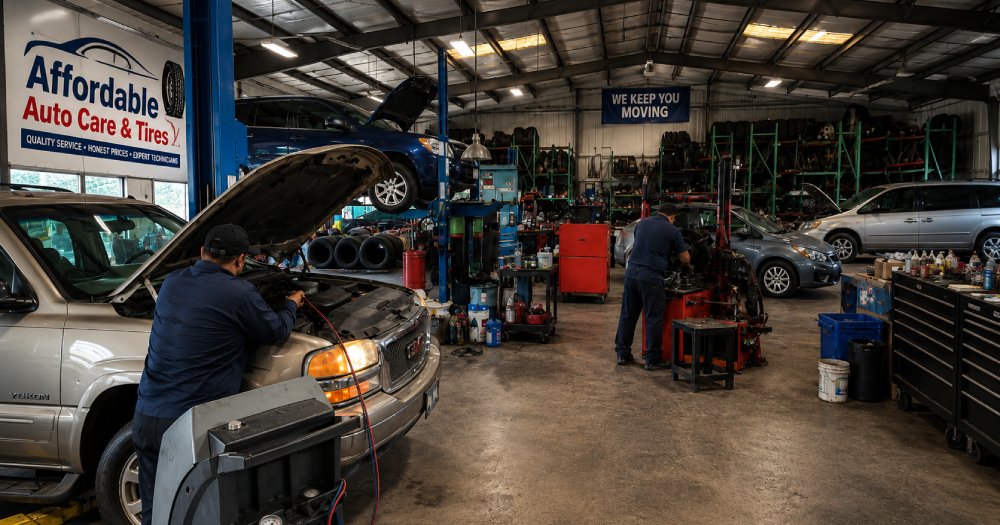
    Auto Repair Shop Sugar Land TX: What Local Drivers Should Know Before Booking a Service

      If you live anywhere near Sugar Land, you already know how fast a small car problem can turn into a Saturday-morning headache. One minute your car is running fine, and the next you’re hearing a squeal from the brakes or watching the temperature gauge creep past normal. That’s usually the moment people start typing “auto repair shop Sugar Land TX” into their phone, hoping to find somewhere that won’t overcharge them or keep the car for three days without an update. This guide isn’t going to be another generic list of “top 10 mechanics near you.” Instead, it’s meant to walk you through what actually matters when picking an auto repair shop in Sugar Land, TX: what separates a decent shop from a great one, what kind of costs you should expect, and how to avoid the common traps that leave drivers frustrated after a repair. Why Sugar Land Drivers Need a Shop They Can Actually Trust Sugar Land isn’t a small town anymore. Between Telfair, First Colony, Riverstone, and Sweetwater, there’s a lot of daily driving happening: school runs, commutes into Houston, weekend errands across town. All that mileage adds up, and Texas heat doesn’t do your car any favors either. Summers here regularly push past 95°F, which is brutal on AC systems, batteries, and rubber components like belts and tires. That combination of heavy daily use plus extreme heat means Sugar Land vehicles tend to need attention a little more often than cars in milder climates. The problem is, not every repair shop treats that reality the same way. Some shops rush through inspections just to get cars in and out. Others take the time to actually explain what’s wrong, show you the worn part, and give you options instead of a single “take it or leave it” price. That difference is really what people are searching for when they look up an auto repair shop in Sugar Land, TX. They’re not just looking for someone with a wrench. They’re looking for someone who won’t waste their time or their money. What a Good Auto Repair Shop in Sugar Land Should Offer A shop worth your business usually checks a few boxes without you even having to ask: ASE-certified technicians – This isn’t just a badge on the wall. ASE certification means the person working on your car has passed standardized testing on specific systems, including engines, brakes, and electrical work, among others. It’s one of the easiest ways to tell a shop takes training seriously. Transparent, upfront pricing – You should get a written estimate before any work starts, not a surprise number when you come to pick up your keys. If a shop hesitates to explain costs clearly, that’s usually a sign to keep looking. Honest diagnostics – A trustworthy shop will tell you when something can wait and when it can’t. Not every warning light means an emergency, and a shop that pressures you into repairs you don’t need yet isn’t doing you any favors. Genuine or high-quality parts – Ask what kind of parts they’re using, whether that’s OEM, aftermarket, or a mix. There’s nothing wrong with quality aftermarket parts, but you deserve to know what’s going into your car. A shop that treats you like a person, not a ticket number – This one’s harder to measure, but you’ll feel it the moment you walk in. Family-owned shops in particular tend to build long-term relationships with customers rather than treating every visit as a one-time transaction. Common Repairs Sugar Land Drivers Bring In Certain issues show up again and again at local shops, and most of them tie back to the climate and driving patterns here. AC repair is probably the single most requested service between May and September. When your compressor, condenser, or refrigerant lines start failing in 100-degree heat, it’s not something you can put off for long. Brake work is another steady one, since city driving with a lot of stop-and-go traffic wears pads down faster than highway cruising does. Tire issues come up constantly too, partly because Texas heat accelerates rubber aging and partly because road debris on freeways like the Grand Parkway and Highway 6 is unavoidable. Then there’s the usual list: oil changes, battery replacements (heat is brutal on batteries), alignment issues from potholes, and check-engine-light diagnostics that could mean anything from a loose gas cap to a failing sensor. None of these are unusual problems. What matters is finding a shop that can diagnose them accurately the first time, instead of guessing and hoping. How Much Should Auto Repair Cost in Sugar Land, TX? This is one of the most searched questions, and honestly, there’s no single answer. It depends heavily on your vehicle’s make, model, age, and what’s actually wrong. That said, here’s a rough sense of what drivers typically encounter: Routine oil changes tend to run on the lower end of the cost spectrum, especially for shops that don’t push unnecessary add-ons. Brake pad replacement costs more if rotors also need to be resurfaced or swapped. AC repairs vary the most, since a simple recharge is far cheaper than replacing a failed compressor. Battery replacement is usually straightforward and predictable, while things like transmission or engine work can climb quickly depending on parts availability. The best way to avoid sticker shock isn’t to guess. It’s to ask for a written estimate before any repair begins and to ask what would happen if you skipped the repair for now. A shop confident in its diagnosis won’t mind explaining that. How to Choose the Right Shop (Without Wasting a Whole Afternoon) You don’t need to visit five shops in person to figure out who’s worth your business. A few quick checks go a long way: Look at recent reviews, not just the star rating. Reviews from the last few months tell you more about current service quality than a rating built up over ten years. Call ahead and ask a specific question, like how they handle diagnostics

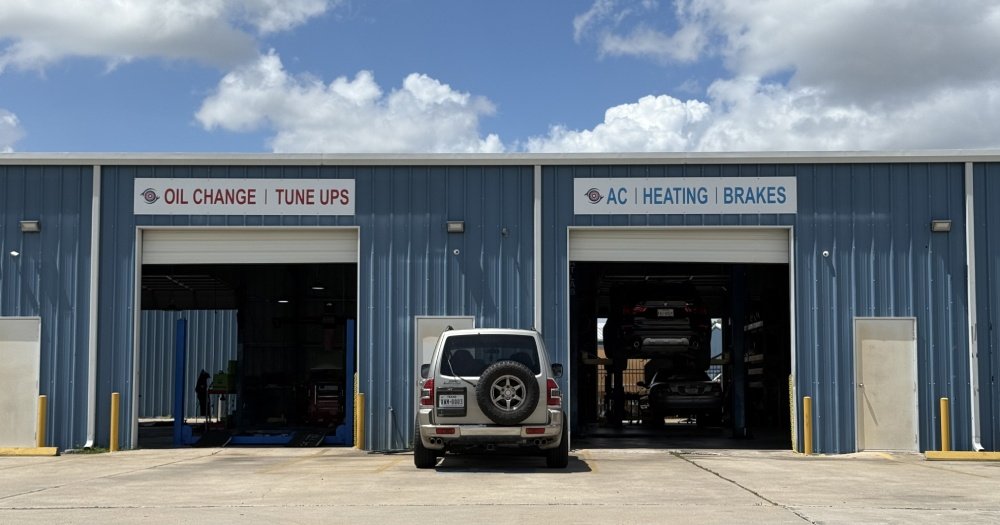
    Engine repair Sugar Land auto shop with oil change, tune up, AC, heating, and brakes service bays

    Car Engine Repair in Sugar Land, TX: Costs, Options & What Actually Happens at the Shop

    If you’re searching for engine repair Sugar Land drivers can rely on, this guide covers what repairs typically cost, how to know which option fits your situation, what happens once you drop your car off, and how to choose a shop you can trust. What Determines the Cost of Engine Repair? No two engine repairs cost the same, and anyone who quotes you a number without inspecting the vehicle first is guessing. Several factors drive the final price: Make and model. Parts for a Honda Civic cost far less than parts for a European luxury sedan. Labor time. Some repairs take an hour; others require pulling the engine out entirely. Age and mileage. Older, high-mileage engines sometimes reveal additional wear once a technician gets inside. OEM vs. aftermarket parts. Genuine manufacturer parts cost more but often carry better warranties. Severity. A simple gasket replacement and a full internal rebuild are worlds apart in price. Rather than guessing based on symptoms, the only reliable way to get an accurate number is a hands-on diagnostic. Ballpark ranges you’ll find online are a starting point for research, not a quote you should expect a shop to honor sight unseen.   Repair, Rebuild, or Replace? How to Decide This is the question that actually matters once a mechanic tells you something serious is wrong internally. Here’s how the three options differ: Repair makes sense when the problem is isolated, such as a single failed component like a water pump, a leaking gasket, or a faulty sensor. If the rest of the engine is healthy, fixing the specific part is the most cost-effective route. Rebuild (sometimes called a reman, or remanufacture) means the engine is taken apart, worn components are replaced or machined back to spec, and it’s reassembled. This is usually the right call when internal wear is widespread, but the block itself is still structurally sound. It costs more than a single repair but significantly less than a full replacement. Replace becomes the practical choice when the block is cracked, damage is too extensive to justify rebuilding, or rebuild labor would cost nearly as much as a replacement engine. Replacement engines can be new, remanufactured, or a quality used engine from a low-mileage donor vehicle. A rough rule of thumb: if the repair cost is under 30-40% of your car’s value, repairing or rebuilding usually makes sense. Beyond that, weigh the cost of replacement, or even whether it’s time for a different vehicle. A trustworthy shop walks you through this math honestly instead of pushing the most expensive option by default. What Different Engine Noises Actually Mean? Not all engine noises point to the same problem, and knowing the difference can help you describe the issue accurately when you call for an appointment. Knocking or pinging under acceleration often points to detonation issues, sometimes caused by low-quality fuel, sometimes by a more serious internal problem like worn rod bearings. Ticking or tapping, especially right after startup, is frequently related to low oil pressure or valvetrain components like lifters. Whining or grinding is more often a belt, pulley, or accessory component issue rather than something internal to the engine itself. Hissing usually signals a vacuum or exhaust leak rather than a mechanical engine problem. Rattling on startup that fades can point to timing chain slack, which is worth having checked before it worsens. Noise alone isn’t a diagnosis, but describing what you’re hearing, when it happens, and under what conditions helps a technician narrow things down faster once the car is on the lift. What Happens When You Bring Your Car in for Engine Repair? A lot of drivers put off car engine repair in Sugar Land shops could easily fix, simply because the process feels like a mystery. Here’s what a proper visit typically looks like: Initial conversation. You describe the symptoms: noises, warning lights, when the issue started, and any patterns you’ve noticed. Computer diagnostic scan. Technicians pull trouble codes from the vehicle’s onboard computer, which point toward, but don’t always confirm, the root cause. Physical inspection. This is where experience matters. A code might say “misfire,” but only a hands-on inspection reveals whether it’s a spark plug, a coil, a vacuum leak, or something deeper. Diagnosis and explanation. A good shop explains what’s actually wrong in plain language, along with the repair options and cost before any work begins. Repair work. Once you approve, the technician completes the repair, using OEM or quality aftermarket parts depending on what you’ve agreed to. Test drive and verification. The vehicle should be road-tested to confirm the original problem is resolved, not just that a warning light turned off. If a shop skips straight from “check engine light is on” to a repair quote without a real inspection, that’s a red flag worth paying attention to. Used, New, or Remanufactured: Choosing a Replacement Engine When replacement is the right call, you generally have three options: New engine. Rare for most consumer repairs since manufacturers typically don’t sell bare new engines outside of specific programs. Highest cost, longest lifespan. Remanufactured engine. Rebuilt to factory specifications with new or reconditioned parts, often backed by a solid warranty. A strong middle ground choice for most drivers. Used engine. Pulled from another vehicle, usually the most affordable option. The key risk is unknown history: mileage, maintenance records, and prior damage aren’t always verifiable, so buying from a shop that tests and verifies used engines before installation matters. For most drivers weighing cost against reliability, a remanufactured engine tends to offer the best balance, a warranty backing the investment without paying new-engine prices. Why Local Drivers Choose Affordable Auto Care & Tires for Engine Work? Engine repair isn’t something you want to hand off to just anyone. As one of the most trusted names for car engine repair in Sugar Land has to offer, Affordable Auto Care & Tires has built its reputation on honest diagnostics and quality repairs, not upselling. A few things worth checking before you commit: 

    used tires sugarland tx

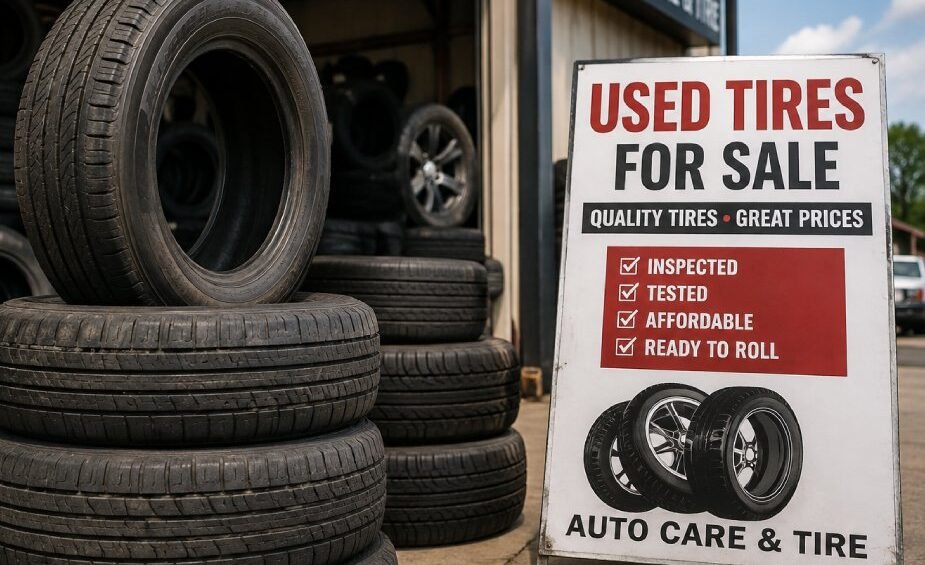
    Used Tires in Sugar Land, TX: The Complete Buyer’s Guid

    If your tires are worn down and a new set feels out of budget, you’re not alone. Plenty of drivers search for used tires Sugar Land TX to stay safe without draining their wallet — but buying secondhand isn’t as simple as grabbing whatever’s cheapest. Are Used Tires Safe to Buy? Yes, but only if you know what you’re looking at. A used tire isn’t unsafe just because it’s not new — plenty get pulled off vehicles with 60-70% of tread life remaining, maybe from a trade-in or rim upgrade, and can give thousands more safe miles for a fraction of the cost. The real risk comes from hidden damage: sidewall bulges, internal belt separation, dry rot, or tread worn past the legal limit. These aren’t always visible at a glance, which is why buying from an established shop that actually inspects its stock is safer than trusting a random online listing or unknown seller. “Used” and “unsafe” aren’t the same thing — it’s the lack of inspection, not the tire’s age, that usually causes problems. How to Inspect Used Tires Before Buying (Checklist) Run through this before committing to a purchase: Tread depth – Use a gauge or the penny test; aim for at least 5/32″. Wear pattern – Uneven wear can signal alignment issues or underinflation. Sidewalls – Check for cracks, bulges, cuts, or dry rot. DOT date code – The sidewall stamp shows the manufacture year; avoid tires older than 6-8 years. Interior check – Ask about patches or signs of a prior blowout repair. Size match – Confirm it matches your door jamb sticker. History – Ask if it came from a wrecked vehicle, lease turn-in, or trade-in. If a seller won’t let you inspect closely or dodges these questions, walk away. Where to Buy Used Tires in Sugar Land, TX Look for a shop that grades tires by condition rather than selling everything at one flat price, offers a short warranty or return window, mounts and balances on-site, and has recent reviews mentioning used tire quality specifically. If you’re shopping for used tires Sugar Land TX has several good options — independent tire shops, recycling centers, and used-tire warehouses all carry inventory, but stock changes constantly with trade-ins, so call ahead to confirm your size is available before driving over. One local option worth checking is Auto Care and Tire, which serves the Sugar Land area for used tire sales and installation.   How Long Do Used Tires Actually Last? It depends on tread depth and age at purchase: 8/32″ or more – Often another 20,000-30,000 miles, depending on driving habits. 5/32″-7/32″ – Usable, but expect to replace within 10,000-15,000 miles. Below 4/32″ – Treat as a short-term fix, not a real purchase. Age matters as much as tread — a seven-year-old tire with plenty of tread can still fail from rubber degradation, so weigh both factors together. Tire Balancing vs. Alignment Balancing corrects uneven weight in the tire/wheel assembly — an imbalance shows up as vibration in the steering wheel at highway speed, fixed by attaching small weights to the wheel. Alignment adjusts wheel angles to your manufacturer’s specs; poor alignment causes pulling to one side or uneven tread wear. Balancing should happen every time a tire is mounted; alignment should be checked if you notice pulling. Skipping either shortens the life of the tire you just paid for. Used Tires vs. Retread Tires A used tire is simply a previously mounted tire, unaltered from its original state. A retread starts with a worn but structurally sound casing and gets a brand-new layer of tread bonded on — common in commercial trucking, safe when it meets DOT standards. The difference: a used tire’s tread is original and worn some amount, while a retread’s tread is new but built on a used foundation. Retreads suit trucks and trailers well; most drivers still prefer genuine used tires for daily passenger vehicles since there’s no bonding seam. Used Tires for Leased Vehicles: Is It a Good Idea? Proceed carefully. Most leases require a minimum tread depth at return (commonly 4/32″-5/32″) and tires matching the original size and rating. Check your lease’s tire condition clause before buying. Pick tread depth comfortably above the minimum, since lease-end inspectors are strict. Match size, load index, and speed rating exactly. Keep your receipt as proof in case of a dispute at turn-in. Used tires can work fine for a lease if you’re careful — cutting corners on tread depth can cost more in lease-end fees than you saved.   Used Tire Pricing Guide Tire Condition Budget / low tread (3/32″-4/32″) Mid-range (5/32″-7/32″) Higher tread (8/32″+) Premium brands, good tread Expect an added 15-30 per tire for mounting, balancing, and disposal — confirm whether these are included before comparing shops. Used Tire Tread Depth Guide 10/32″ – New tire territory. 8/32″-9/32″ – Performs close to new, especially wet. 6/32″-7/32″ – Solid daily driving condition. 4/32″-5/32″ – Legally drivable but wet traction drops; start budgeting for replacement. 2/32″ – Legal minimum in most states, including Texas. Replace immediately. For used tires specifically, avoid anything under 5/32″ unless you plan to replace it again soon. Used Tire Warranty and Return Policy Ask sellers about: Road hazard coverage – Is a tire replaced or credited if it fails soon after purchase? Return window – Many shops offer 14-30 days for exchange. Warranty voids – Improper installation or accident damage typically isn’t covered. Proration – Some refunds are partial, based on remaining tread. Get any terms in writing — a shop unwilling to note this on the receipt isn’t worth relying on later.   Best Tire Shop Near Sugar Land A strong pick for used tires Sugar Land TX inspects and grades tires rather than selling as-is, offers same-day mounting and balancing, has recent reviews mentioning fair pricing, and carries sizes for both passenger cars and trucks/SUVs. Cheap and Affordable Used Tires in Sugar Land Buy a matching set of four rather than mixing brands

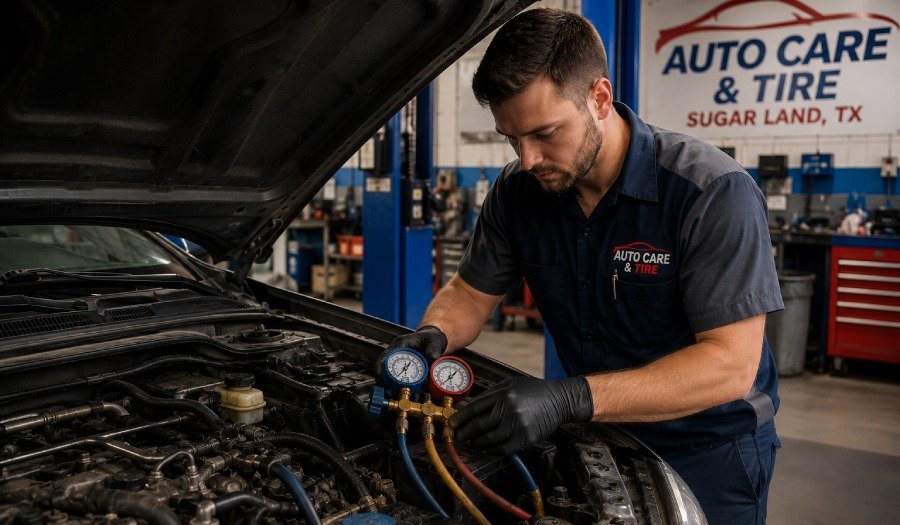
    Car AC repair technician servicing vehicle AC system in Sugar Land, TX

    Car AC Repair in Sugar Land, TX: Causes, Costs & When to Get It Fixed

    There’s nothing worse than climbing into your car on a hot Texas afternoon and realizing your air conditioning is blowing warm air instead of cold. In Sugar Land, where summer temperatures regularly climb past 95°F, a working car AC isn’t a luxury — it’s a necessity. If your car’s air conditioning has stopped cooling, started making strange noises, or simply isn’t working the way it used to, this guide will walk you through the most common causes, what to expect from repair costs, and how to find a trustworthy car AC repair shop in Sugar Land to get you back on the road in comfort.   Why Is My Car AC Not Cooling? This is one of the most common questions car owners search for, and the honest answer is that there are several possible causes. Here are the most frequent culprits behind a car AC that won’t cool properly: 1. Low or Leaking Refrigerant Refrigerant is the fluid that actually absorbs heat from your cabin air and releases it outside. Over time, small leaks can develop in hoses, seals, or connections, causing refrigerant levels to drop. Once levels fall too low, your AC simply can’t produce cold air, even though the system still runs. 2. A Failing Compressor The compressor is the heart of your AC system — it pressurizes the refrigerant and keeps it circulating. When a compressor fails or its clutch stops engaging, the whole system stops working. Compressor failure is often accompanied by loud grinding or squealing noises. 3. Clogged or Blocked Condenser The condenser sits at the front of your vehicle and releases heat from the refrigerant. Dirt, debris, and road grime can block airflow through the condenser, reducing its ability to cool the refrigerant effectively. 4. Electrical Issues Modern car AC systems rely on sensors, relays, and fuses to operate correctly. A blown fuse or a faulty pressure switch can prevent the compressor from engaging at all, even if every mechanical part is in good shape. 5. Faulty Expansion Valve or Orifice Tube This small component regulates how much refrigerant enters the evaporator. If it becomes clogged or stuck, it can cause inconsistent cooling or a complete loss of cold air. Signs Your Car AC Is Failing Catching AC problems early can save you from a more expensive repair down the road. Watch for these warning signs: Warm or weak airflow — the AC runs but doesn’t cool the cabin effectively Unusual odors — a musty or moldy smell often points to mold buildup in the evaporator or cabin filter Strange noises — clicking, grinding, or squealing when the AC is turned on usually signals a compressor or belt issue Refrigerant leaks — an oily residue or puddle under the front of the vehicle Cycling on and off rapidly — the compressor engaging and disengaging repeatedly, often due to low refrigerant or an electrical fault Foggy or humid windows — a sign the AC isn’t properly dehumidifying the cabin air If you notice any combination of these symptoms, it’s worth scheduling a diagnostic before the underlying issue gets worse — or before the compressor fails completely, which is a far more expensive repair. Car AC Recharge vs. Repair: What’s the Difference? Many drivers assume that a “recharge” and a “repair” are the same thing, but they solve very different problems. AC Recharge A recharge simply adds refrigerant back into the system to restore cooling performance. It’s quick and relatively inexpensive, but it does not fix the root cause if refrigerant is escaping through a leak. Think of it as refilling a tire that has a slow puncture — it works temporarily, but the underlying problem remains. AC Repair A full repair addresses the actual cause of the problem — replacing a leaking hose, fixing a faulty seal, repairing or replacing the compressor, or clearing a blocked condenser. While it costs more upfront, a proper repair prevents the same issue from recurring every few months. Rule of thumb: if this is the first time your AC has lost refrigerant, a recharge combined with a dye test (to detect leaks) is a reasonable first step. If you’ve needed a recharge more than once, it’s time for a full diagnostic and repair. Car AC Repair Cost Near Me: What to Expect Repair costs vary widely depending on what’s actually wrong with your system. Keep in mind these are general ranges — the exact cost depends on your vehicle’s make and model, the age of the system, and the specific parts affected. The best way to get an accurate number is a hands-on diagnostic rather than guessing based on symptoms alone. Best Car AC Repair Shop in Sugar Land, TX When your AC stops working in the Texas heat, you want a shop that diagnoses the problem correctly the first time — not one that just tops off refrigerant and sends you on your way. Here’s what to look for in a trustworthy car AC repair shop: ASE-certified technicians with AC/refrigerant handling certification Proper leak-detection equipment (electronic detectors and UV dye testing) Transparent, upfront pricing before any work begins Warranty on parts and labor Genuine or high-quality OEM-equivalent replacement parts At Auto Care & Tire in Sugar Land, our technicians perform a full system diagnostic — checking refrigerant pressure, scanning for leaks, and inspecting the compressor, condenser, and hoses — before recommending any repair. That means you get an accurate diagnosis and a fair price, not a guessing game. How to Prevent Future AC Problems A little routine maintenance goes a long way toward keeping your AC running smoothly year-round: Run your AC for a few minutes even in cooler months to keep seals lubricated Replace your cabin air filter every 12,000–15,000 miles Get your AC system inspected once a year, ideally before summer Address small leaks early rather than waiting for a full system failure Ready to Fix Your Car AC? If your car’s AC isn’t blowing cold, don’t wait for the problem to get worse. Bring

    Car breakdown with engine smoke - Best Vehicle Repair Shop in Sugar Land

    Best 5 Reasons Your Car AC Fails in Summer | Best Vehicle Repair Shop in Sugar Land

    Expert Guide from the Best Vehicle Repair Shop in Sugar Land – Nothing ruins a summer drive faster than turning on your car’s air conditioning and feeling nothing but warm air. During the intense Texas summer, a properly functioning AC system isn’t just about comfort – it’s essential for safe and enjoyable driving. Unfortunately, many drivers don’t realize that their vehicle’s air conditioning system works harder during the hottest months of the year. As temperatures rise, small AC issues that went unnoticed during cooler seasons often become major problems. What starts as slightly reduced cooling can quickly turn into complete AC failure. If your car’s air conditioner isn’t keeping you cool, understanding the most common causes can help you avoid expensive repairs and uncomfortable summer driving. In this comprehensive guide from the Best Vehicle Repair Shop in Sugar Land, we’ll explore the five most common reasons car AC systems fail during summer, warning signs to watch for, and how preventive maintenance can keep your vehicle cool when temperatures soar. Why Your Car AC Works Harder During Summer? Your vehicle’s air conditioning system is designed to remove heat from inside the cabin and circulate cool air throughout the vehicle. When outside temperatures exceed 90°F or even 100°F, as they often do in Texas, the AC system must work significantly harder. Summer conditions create additional stress on: The compressor Refrigerant lines Cooling fans Condenser Electrical components As a result, existing weaknesses in the system become much more noticeable. At the Best Vehicle Repair Shop in Sugar Land, AC-related service requests increase dramatically during the summer months. Signs Your Car AC Is Beginning to Fail++ Before complete failure occurs, most air conditioning systems provide warning signs. Common symptoms include: Weak airflow Warm air from vents Strange noises Unpleasant odors Inconsistent cooling Longer cooling times AC cycling on and off frequently Ignoring these early signs often leads to more expensive repairs later. Reason #1: Low Refrigerant Levels One of the most common reasons vehicle AC systems stop cooling effectively is low refrigerant. What Is Refrigerant? Refrigerant is the substance responsible for absorbing heat and producing cold air. Without sufficient refrigerant, the AC system cannot properly cool the cabin. Why Refrigerant Levels Drop? Contrary to popular belief, refrigerant does not simply “wear out.” Low refrigerant usually indicates: Leaks in the system Damaged seals Worn hoses Faulty connections Symptoms of Low Refrigerant You may notice: Warm air from vents Reduced cooling performance Longer cooling times AC compressor cycling frequently Why Immediate Repair Matters? Driving with low refrigerant can place additional stress on the compressor, potentially leading to one of the most expensive AC repairs. At the Best Vehicle Repair Shop in Sugar Land, refrigerant leaks are among the most frequently diagnosed summer AC issues. Reason #2: Failing AC Compressor The compressor is often called the heart of the air conditioning system. Without it, the entire cooling process stops. What Does the Compressor Do? The compressor: Pressurizes refrigerant Circulates refrigerant through the system Enables heat transfer When the compressor fails, the AC system cannot produce cold air. Common Causes of Compressor Failure Several factors contribute to compressor problems: Low refrigerant Lack of lubrication Electrical failures Excessive wear Contaminated refrigerant Warning Signs of Compressor Problems that need to Watch for: Loud clicking noises Grinding sounds Warm air AC system not engaging Why This Repair Can Be Expensive? Ignoring compressor issues often leads to damage throughout the AC system. Early diagnosis from the Best Vehicle Repair Shop in Sugar Land can significantly reduce repair costs. Reason #3: Condenser Problems Your AC condenser plays a vital role in removing heat from refrigerant. Because it’s located near the front of the vehicle, it’s vulnerable to damage from road debris and environmental conditions. What Happens When the Condenser Fails? A damaged condenser cannot efficiently release heat. This causes: Reduced cooling performance Increased system pressure AC inefficiency Common Causes of Condenser Damage These include: Rock impacts Debris accumulation Corrosion Physical damage Symptoms of Condenser Issues Drivers often experience: Warm air from vents Inconsistent cooling Refrigerant leaks Why Summer Makes Condenser Problems Worse? During extreme Texas heat, the condenser must work harder to release heat. Even minor restrictions can significantly impact cooling performance. At the Best Vehicle Repair Shop in Sugar Land, we tried our best to give our clients. Reason #4: Faulty Cooling Fans Cooling fans are responsible for maintaining airflow across the condenser. Without proper airflow, heat cannot be removed efficiently. Why Cooling Fans Matter? The AC system relies on airflow to operate effectively. When cooling fans fail: Refrigerant temperatures increase Cooling performance drops System pressure rises Common Fan Problems Potential issues include: Burned-out fan motors Electrical failures Damaged fan blades Faulty relays Symptoms of Fan Failure You may notice: AC works while driving but not while idling Engine temperatures rise Reduced cooling during traffic Why This Is Common in Summer? Heavy traffic and high temperatures place additional demands on cooling fans. At the Best Vehicle Repair Shop in Sugar Land, faulty cooling fans are a frequent cause of summer AC complaints. Reason #5: Electrical System Issues Modern vehicles depend heavily on electronic controls. A small electrical problem can disrupt the entire AC system. Common Electrical Issues. Examples include: Blown fuses Faulty sensors Damaged wiring Failed relays Malfunctioning control modules Symptoms of Electrical Problems Watch for: AC turning on and off unexpectedly Inconsistent cooling Unresponsive controls Warning lights Why Professional Diagnostics Matter? Electrical issues can be difficult to identify without specialized equipment. Professional testing helps pinpoint the exact cause quickly and accurately. At the Best Vehicle Repair Shop in Sugar Land, we tried our best to give our clients. Additional Reasons Your Car AC May Not Cool Properly While the top five causes account for most AC failures, other factors can contribute as well. Dirty Cabin Air Filter A clogged cabin air filter restricts airflow. This can make the AC feel weak even when cooling properly. Blocked Vents Dust and debris can reduce airflow throughout the cabin. Faulty Expansion Valve This

    Top 7 Reasons Your Car Is Losing Power

    Top 7 Reasons Your Car Is Losing Power | Best Vehicle Repair Shop

    Expert Insights from the Best Vehicle Repair Shop in Sugar Land – Is your car losing power? Have you noticed it doesn’t accelerate like it used to, struggles when climbing hills, or hesitates while merging onto highways? If so, your vehicle may be experiencing power loss – a common issue that many drivers ignore until it becomes a major repair problem. A loss of engine power is more than just an inconvenience. It can affect your vehicle’s performance, fuel efficiency, safety, and overall reliability. In some cases, it may even indicate serious engine or transmission problems that require immediate attention. The good news is that most causes of power loss can be diagnosed and repaired before they turn into expensive breakdowns. In this comprehensive guide from the Best Vehicle Repair Shop in Sugar Land, we’ll explore the seven most common reasons your car is losing power, warning signs to watch for, and how professional maintenance can keep your vehicle performing at its best.   Why Engine Power Matters? Your vehicle’s engine generates power through a carefully balanced combination of air, fuel, ignition, and mechanical operation. When any of these systems fail to work properly, performance suffers. Power loss often shows up as: Slow acceleration Difficulty maintaining speed Poor towing performance Engine hesitation Reduced fuel economy Rough driving experience While these symptoms may seem minor initially, they often indicate underlying problems that should not be ignored. At the Best Vehicle Repair Shop in Sugar Land, technicians frequently diagnose power loss issues before they evolve into costly repairs.   Signs That Your Vehicle Is Losing Power Before discussing the causes, it’s important to recognize the symptoms. Common warning signs include: Sluggish acceleration Engine sputtering Difficulty climbing hills Delayed throttle response Excessive exhaust smoke Check Engine Light activation Poor fuel economy If you’re experiencing one or more of these symptoms, professional diagnostics are highly recommended. As the Best Vehicle Repair Shop in Sugar Land, we do our best.  Reason #1: Dirty or Clogged Air Filter One of the simplest and most overlooked causes of power loss is a dirty air filter. Why Airflow Matters? Your engine needs a precise mixture of fuel and oxygen to produce power. A clogged air filter restricts airflow, causing: Reduced combustion efficiency Poor acceleration Lower fuel economy Increased engine strain Common Signs of a Dirty Air Filter Sluggish engine performance Reduced gas mileage Black exhaust smoke Rough idling The Good News Air filter replacement is one of the most affordable maintenance services available. At the Best Vehicle Repair Shop in Sugar Land, technicians often identify dirty air filters during routine inspections.   Reason #2: Fuel System Problems Your engine cannot generate power without a steady supply of clean fuel. When fuel delivery becomes restricted, performance declines quickly. Common Fuel System Issues Clogged fuel filter Failing fuel pump Dirty fuel injectors Fuel contamination Symptoms of Fuel System Problems Engine hesitation Difficulty starting Power loss during acceleration Engine stalling Why Immediate Attention Matters? Ignoring fuel system issues can lead to: Engine damage Increased fuel consumption Expensive repair bills Professional fuel system cleaning can often restore lost performance. As the Best Vehicle Repair Shop in Sugar Land, we always try to do our best.  Reason #3: Faulty Spark Plugs Spark plugs play a crucial role in combustion. They ignite the air-fuel mixture that powers your engine. What Happens When Spark Plugs Wear Out? Old or damaged spark plugs may cause: Engine misfires Reduced power Rough idling Poor fuel efficiency Warning Signs Difficulty starting Check Engine Light Hesitation during acceleration Vibrations while driving Maintenance Benefits Replacing spark plugs on schedule helps: Restore engine performance Improve fuel economy Reduce emissions At the Best Vehicle Repair Shop in Sugar Land, spark plug inspections are part of comprehensive engine diagnostics. Reason #4: Mass Air Flow Sensor Failure The Mass Air Flow (MAF) sensor measures how much air enters the engine.This information helps the engine control module determine the correct fuel mixture. What Happens When It Fails? A faulty MAF sensor can cause: Incorrect fuel delivery Reduced engine power Poor fuel economy Rough performance Symptoms Include Hesitation Stalling Check Engine Light Reduced acceleration Why Professional Diagnostics Matter? Because MAF sensor issues often mimic other problems, accurate testing is essential. The Best Vehicle Repair Shop in Sugar Land uses advanced diagnostic tools to pinpoint sensor-related issues quickly.   Reason #5: Exhaust System Restrictions Your engine must expel exhaust gases efficiently. When the exhaust system becomes restricted, engine performance suffers. Common Causes Clogged catalytic converter Damaged exhaust pipes Internal exhaust blockage Symptoms Poor acceleration Engine overheating Reduced fuel efficiency Sulfur or rotten egg smell Why This Is Serious? A blocked catalytic converter can significantly reduce engine output and may eventually damage other components. Reason #6: Transmission Problems Sometimes power loss isn’t caused by the engine at all. The transmission plays a critical role in transferring engine power to the wheels. Common Transmission Issues Low transmission fluid Worn clutch components Internal transmission damage Slipping gears Warning Signs Delayed shifting High RPM without acceleration Jerking movements Burning smell Potential Costs Ignoring transmission problems can result in repairs costing thousands of dollars. Early diagnosis at the Best Vehicle Repair Shop in Sugar Land can prevent major failures. As the Best Vehicle Repair Shop in Sugar Land, we always try to do our best.  Reason #7: Engine Compression Problems Compression is essential for combustion. Without proper compression, the engine cannot generate adequate power. Causes of Compression Loss Worn piston rings Damaged valves Head gasket failure Internal engine wear Symptoms Significant power loss Excessive exhaust smoke Increased oil consumption Rough engine operation Why Immediate Repair Is Important? Compression issues often indicate serious engine problems that worsen over time. Professional inspection is critical to prevent complete engine failure. As the Best Vehicle Repair Shop in Sugar Land, we always try to do our best.  Additional Factors That Can Cause Power Loss Beyond the top seven causes, several other issues may contribute. Low Engine Oil Insufficient lubrication increases friction and reduces efficiency. Overheating An

    tire repair shop in Sugar Land - woman changing car tire

    Top 5 Signs You Need New Tires Right Now | Best Tire Repair Shop

    Expert Advice from the Best Tire Repair Shop in Sugar Land – Your tires are the only part of your vehicle that makes direct contact with the road. They play a critical role in your safety, fuel efficiency, braking performance, and overall driving experience. Yet many drivers ignore their tires until a serious problem occurs. The truth is that worn or damaged tires are one of the leading causes of preventable accidents, poor vehicle performance, and unexpected breakdowns. Driving on unsafe tires not only puts your safety at risk but can also lead to expensive repairs and increased fuel costs. So, how do you know when it’s time for a new set of tires? In this comprehensive guide from the Best Tire Repair Shop in Sugar Land, we’ll reveal the top five warning signs that indicate you need new tires immediately, explain why acting quickly matters, and show how replacing worn tires can save you money while improving your safety on Texas roads. Why Tire Condition Matters More Than You Think? Most drivers focus on the engine, brakes, and transmission when it comes to vehicle maintenance. While these systems are important, tires are equally critical. Your tires affect: Vehicle stability Braking performance Fuel economy Steering control Ride comfort Safety during wet weather A worn tire can significantly increase stopping distance, reduce traction, and increase the likelihood of an accident. At the Best Tire Repair Shop in Sugar Land, technicians frequently see vehicles with dangerously worn tires that drivers didn’t realize needed replacement. The Hidden Cost of Delaying Tire Replacement Many vehicle owners postpone buying new tires because they want to save money. Ironically, delaying replacement often costs much more. Worn tires can lead to: Poor fuel efficiency Suspension damage Alignment problems Increased risk of blowouts Higher repair bills Reduced vehicle value Replacing tires at the right time protects both your vehicle and your wallet. Sign #1: Your Tire Tread Is Too Low One of the most obvious indicators that you need new tires is insufficient tread depth. Tread is the patterned rubber surface that grips the road and channels water away from the tire. As tires wear down, they lose their ability to maintain traction. Why Tread Depth Matters? Proper tread depth helps: Improve braking Enhance cornering Reduce hydroplaning Increase stability When tread becomes too shallow, your tires struggle to maintain contact with the road, especially during rain. The Penny Test A simple way to check tread depth is the penny test. Insert a penny into the tread groove with Lincoln’s head facing down. If you can see the top of Lincoln’s head, your tread is too low and it’s time for replacement. Dangers of Driving with Low Tread Driving with worn tread increases: Stopping distance Accident risk Tire failure Hydroplaning risk If your tread is low, visit the Best Tire Repair Shop in Sugar Land immediately for a professional inspection. Sign #2: Uneven Tire Wear Tires should wear evenly across their entire surface. If one area wears faster than another, it often indicates a larger problem. Common Causes of Uneven Wear Uneven tire wear can result from: Improper alignment Incorrect tire pressure Suspension issues Lack of tire rotation What Uneven Wear Looks Like, Watch for: Bald edges Center wear One-sided wear Feathering patterns These wear patterns indicate that your tires are no longer performing optimally. Why Uneven Wear Is Dangerous? Unevenly worn tires can: Reduce traction Cause steering problems Increase tire failure risk Shorten tire lifespan At the Best Tire Repair Shop in Sugar Land, technicians can identify the root cause and recommend the best solution. Sign #3: Cracks, Bulges, or Sidewall Damage Tires age over time, even if they still have tread remaining. Exposure to heat, sunlight, and road hazards can weaken the tire structure. Warning Signs to Watch For Inspect your tires regularly for: Sidewall cracks Bulges Blisters Cuts Punctures Why Sidewall Damage Is Serious? A bulge often indicates internal structural damage. This weakens the tire and significantly increases the risk of a blowout. The Texas Heat Factor – Sugar Land drivers face extreme summer temperatures that accelerate tire aging. Heat causes rubber to deteriorate faster, making regular inspections essential. Sign #4: Excessive Vibration While Driving Some road vibration is normal. However, unusual or excessive vibration often indicates tire problems. Possible Causes – Excessive vibration may result from: Tire damage Internal tire separation Wheel imbalance Uneven wear Alignment issues Why You Shouldn’t Ignore It? Vibration doesn’t just affect comfort. It can indicate a serious safety issue that may lead to tire failure. What Happens If You Wait? Ignoring vibration can lead to: Suspension damage Steering issues Increased repair costs Tire blowouts Professional diagnosis from the Best Tire Repair Shop in Sugar Land can identify the problem before it becomes dangerous. Sign #5: Your Tires Are More Than Six Years Old Many drivers assume tires only need replacement when tread wears out. That’s not always true. Rubber deteriorates over time regardless of mileage. How Tire Aging Affects Safety? As tires age, they become: Less flexible More prone to cracking Less effective in wet conditions More susceptible to blowouts How to Check Tire Age? Every tire includes a DOT code on the sidewall. The last four digits indicate the manufacturing week and year. For example: 2522 = 25th week of 2022 Industry Recommendation Many manufacturers recommend tire inspection after six years and replacement around ten years, regardless of tread condition. Additional Warning Signs You Need New Tires Besides the top five indicators, other symptoms include: Frequent loss of air pressure Reduced traction Longer stopping distances Tire noise Poor fuel economy As the Best Tire Repair Shop in Sugar Land, these signs often indicate that replacement should be considered soon. How New Tires Save You Money? As the Best Tire Repair Shop in Sugar Land, many drivers focus only on the upfront cost of tires. However, new tires can actually reduce overall vehicle expenses. Improved Fuel Efficiency Proper tires reduce rolling resistance. This helps your vehicle use less fuel.

    vehicle repair shop in Sugar Land - mechanic working on car wheel

    Simple Car Fix Can Save Your $500 | Best Vehicle Repair Shop

    Expert Advice from the Best Vehicle Repair Shop in Sugar Land – What if a simple car maintenance service costing less than $100 could save you over $500 in future repairs? Most drivers spend thousands of dollars every year on vehicle repairs that could have been prevented with routine maintenance. Unfortunately, many vehicle owners don’t realize that small issues often become expensive problems when ignored. Whether you’re driving daily through Sugar Land traffic, commuting to work, or taking long Texas road trips, one overlooked maintenance task can significantly impact your vehicle’s performance, fuel efficiency, safety, and repair costs. In this guide, experts from the Best Vehicle Repair Shop in Sugar Land reveal the simple car fix that can save you hundreds of dollars, prevent major breakdowns, and extend the life of your vehicle. Why Small Maintenance Problems Become Expensive Repairs? Most major car repairs don’t happen overnight. A failing engine, damaged transmission, worn suspension, or expensive tire replacement usually starts as a minor issue that gradually worsens over time. Many drivers ignore maintenance because: The car still runs normally There are no warning lights The issue seems insignificant They want to avoid spending money Ironically, delaying maintenance often results in spending much more later. This is why as the Best Vehicle Repair Shop in Sugar Land preventive maintenance remains one of the smartest investments any vehicle owner can make. The Simple Fix That Can Save You $500 or More The answer is surprisingly simple: Regular Tire Rotation and Wheel Alignment. Many drivers underestimate the importance of these services. However, proper tire rotation and alignment can: Extend tire lifespan by thousands of miles Improve fuel economy Prevent suspension damage Improve steering performance Reduce uneven tire wear Increase vehicle safety Ignoring these services often leads to premature tire replacement and expensive suspension repairs. At the Best Vehicle Repair Shop in Sugar Land, technicians regularly see customers replace tires months or even years earlier than necessary because they skipped routine tire maintenance. How Tire Rotation Saves Money? Every tire wears differently. Front tires often wear faster because they handle: Steering Braking Vehicle weight As the Best Vehicle Repair Shop in Sugar Land – Without rotation, some tires may wear out twice as fast as others. A tire set costing $800 to $1,200 can lose years of usable life if tire rotation is neglected. Routine rotation helps distribute wear evenly and maximize tire longevity. The Hidden Cost of Uneven Tire Wear As the Best Vehicle Repair Shop in Sugar Land, Many drivers only look at tires when they’re completely worn out. Unfortunately, uneven wear creates several expensive problems: Reduced Fuel Efficiency Uneven tires create more rolling resistance. The engine must work harder to move the vehicle. This leads to: More fuel consumption Increased engine strain Higher operating costs Even a small reduction in fuel efficiency can cost hundreds of dollars annually. Suspension Damage When tires wear unevenly, additional stress is placed on: Shocks Struts Ball joints Tie rods These repairs can quickly exceed $500 to $1,500. Premature Tire Replacement A tire designed to last 60,000 miles may only last 35,000 to 40,000 miles without proper maintenance. That means replacing tires far sooner than expected. Why Wheel Alignment Matters? As the Best Vehicle Repair Shop in Sugar Land, Wheel alignment affects far more than steering. Proper alignment ensures all wheels point in the correct direction. When alignment is off, your vehicle may experience: Uneven tire wear Poor handling Steering pull Reduced fuel economy Many drivers don’t realize their alignment is off until the damage is already done. Common Signs Your Vehicle Needs Alignment Watch for these warning signs: Vehicle pulls left or right Crooked steering wheel Uneven tire wear Vibrations while driving Reduced handling performance As the Best Vehicle Repair Shop in Sugar Land – If you notice any of these symptoms, visiting the Best Vehicle Repair Shop in Sugar Land can prevent expensive repairs. Another Simple Fix That Saves Hundreds: Oil Changes If tire maintenance is the king of cost savings, oil changes are a close second. Engine oil serves several critical functions: Lubrication Cooling Cleaning Wear protection Without proper oil maintenance, internal engine components wear rapidly. What Happens When Oil Changes Are Ignored? Dirty oil loses its protective qualities. This can lead to: Increased friction Excessive heat Sludge buildup Engine wear Eventually, major engine components begin failing. Repairs may include: Timing chain replacement Valve repairs Engine rebuilds Costs often exceed $2,000 to $5,000. Why Air Filter Replacement Is Often Overlooked? One of the cheapest maintenance services can also provide impressive savings. A clogged air filter restricts airflow into the engine. This causes: Reduced fuel efficiency Poor acceleration Increased engine strain Replacing an air filter is inexpensive but can improve overall performance and fuel economy. The True Cost of Ignoring Warning Lights Dashboard warning lights exist for a reason. Many drivers continue driving for weeks or months after a warning light appears. This is a major mistake. The check engine light may indicate: Sensor failure Ignition issues Fuel system problems Emission concerns Addressing these issues early often costs far less than waiting for a breakdown. Why Preventive Maintenance Always Wins? The biggest difference between drivers who spend less and drivers who spend more is preventive maintenance. Smart vehicle owners understand: Small maintenance costs today prevent major repair bills tomorrow. Preventive maintenance helps: Extend vehicle life Improve fuel economy Increase reliability Enhance safety Reduce repair expenses How Texas Weather Increases Repair Risks? Sugar Land drivers face unique challenges. Extreme Texas heat can accelerate: Tire wear Battery failure Cooling system issues Fluid breakdown This makes routine inspections even more important. The Best Vehicle Repair Shop in Sugar Land often sees seasonal breakdowns that could have been prevented through basic maintenance. Signs Your Vehicle May Already Be Costing You Money Your vehicle may be silently wasting money if you notice: Poor fuel economy Uneven tire wear Rough ride quality Engine hesitation Excessive vibrations Warning lights Fluid leaks These symptoms often indicate developing problems. Addressing them early

    Shopping cart close