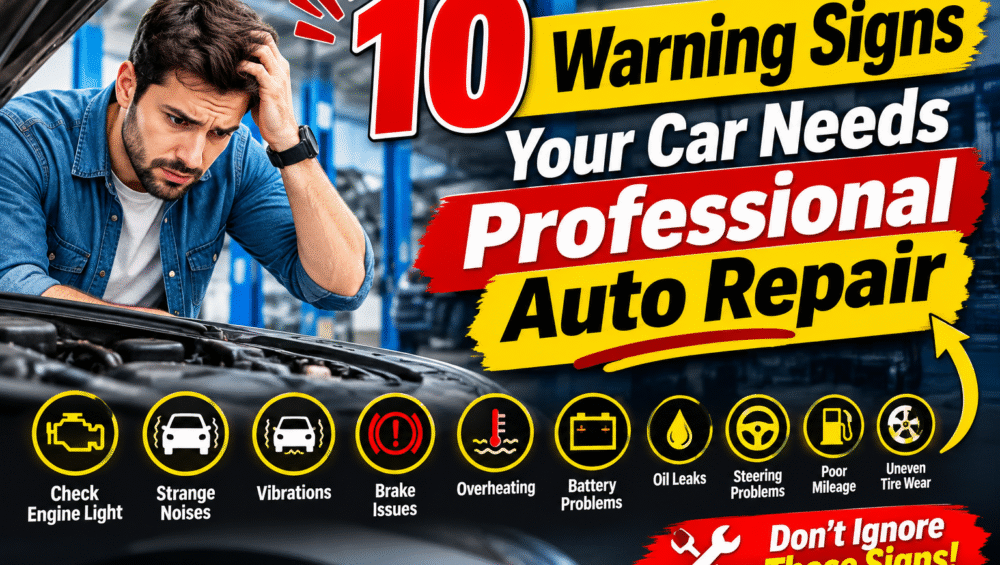
10 Warning Signs Your Car Needs Professional Auto Repair
Discover 10 warning signs your car needs professional auto repair. Learn when to visit the best auto repair shop in Sugar Land. Whether you drive to work, take family road trips, or commute around Sugar Land, keeping your vehicle in excellent condition is essential. Recognising early warning signs can help you avoid unexpected breakdowns and keep your car running smoothly. But how do you know when your vehicle needs professional attention?
From unusual engine noises to declining fuel efficiency, several symptoms indicate that your car may need an inspection from an experienced technician. Knowing when to visit the Best auto repair shop in Sugar Land can make a significant difference in your vehicle’s reliability, performance, and long-term maintenance costs.
1. Your Check Engine Light Keeps Turning On – One of the most common signs that your vehicle needs professional attention is an illuminated check engine light. Modern vehicles use advanced onboard diagnostic systems to monitor engine performance, emissions, and other important components. When the system detects an issue, it activates the check engine warning light on your dashboard.
Some common reasons include:
Faulty oxygen sensors
Loose or damaged gas caps
Ignition system problems
Catalytic converter issues
Mass airflow sensor malfunctions
Although some problems may appear minor, others can affect engine performance and fuel efficiency.
When should you seek professional auto repair?
2. Strange Noises Coming From Your Vehicle – Your vehicle should operate without unusual knocking, grinding, squealing, or rattling sounds. When unfamiliar noises develop, they may indicate worn or damaged components.
Different sounds can point to different mechanical problems:
Squealing: Often associated with worn brake pads or a loose serpentine belt.
Grinding: May indicate worn brake components or transmission problems.
Knocking: Can suggest engine-related issues.
Rattling: May result from loose exhaust components or damaged suspension parts.
Humming: Could indicate wheel bearing or tire-related problems.
3. Your Car Vibrates or Shakes While Driving – A vehicle that suddenly starts shaking or vibrating should never be ignored. Although minor vibrations can sometimes result from road conditions, persistent shaking may indicate a mechanical or alignment problem.
Common causes include:
Unbalanced tires
Improper wheel alignment
Damaged suspension components
Worn engine mounts
Brake rotor problems
Tire damage or uneven wear
Pay attention to when the vibration occurs. For example, shaking at higher speeds may indicate wheel balancing or tire problems, while vibrations during braking can suggest damaged or uneven brake rotors.
A professional inspection can help identify the source and determine whether tire balancing, alignment, brake service, or mechanical repairs are necessary. Addressing these problems early can improve driving comfort, vehicle stability, and road safety.
4. Your Brakes Feel Different or Make Unusual Sounds – Your braking system is one of the most important safety components of your vehicle. Any noticeable change in braking performance deserves immediate attention.
Warning signs of brake problems include:
Squeaking or grinding sounds when braking
A soft or spongy brake pedal
Increased stopping distance
Steering wheel vibration during braking
A brake warning light
Your vehicle pulling to one side when stopping
These symptoms may indicate worn brake pads, damaged rotors, brake fluid issues, or problems with other braking components.
Why is professional brake repair important?

5. Your Engine Frequently Overheats – An overheating engine is a serious warning sign that requires immediate attention. Your vehicle’s cooling system regulates engine temperature and prevents excessive heat buildup. When this system stops functioning correctly, engine temperatures can rise beyond safe operating levels.
Common causes include:
Coolant leaks
A malfunctioning thermostat
Radiator damage
A failing water pump
Cooling fan problems
Low coolant levels
You may notice the temperature gauge rising, steam coming from under the hood, or a coolant temperature warning light appearing on the dashboard.
What should you do if your engine overheats?
6. Your Vehicle Is Leaking Fluid – Finding liquid underneath your parked vehicle is another warning sign that something may require attention. Different automotive fluids have different colours, textures, and locations, which can help indicate the source of a leak. Here are some common examples:
Engine oil: Usually brown or black and slippery.
Coolant: Often green, orange, pink, or another manufacturer-specific color.
Transmission fluid: Commonly reddish or brown.
Brake fluid: Typically clear to amber.
Power steering fluid: Color varies depending on the vehicle and fluid type.
Not every fluid leak indicates the same level of urgency. However, brake fluid leaks, significant coolant leaks, and major oil leaks should never be ignored.
If you notice fluid collecting beneath your car, arrange an inspection. A professional technician can identify the leaking component, assess the severity, and recommend the necessary repairs.
7. Your Fuel Efficiency Suddenly Decreases – Are you visiting the gas station more frequently than usual, even though your driving habits have not changed? A sudden decrease in fuel efficiency may indicate that your vehicle is not operating properly. Several mechanical and maintenance-related issues can contribute to increased fuel consumption, including:
Dirty or clogged air filters
Faulty oxygen sensors
Worn spark plugs
Improper tire pressure
Fuel system problems
Engine performance issues
Driving habits, traffic conditions, weather, and vehicle load can also affect fuel economy.
However, if your car consistently consumes more fuel than usual, a professional inspection may help identify the cause. Regular maintenance and timely repairs can improve engine performance, support better fuel efficiency, and help prevent unnecessary operating expenses.
8. Your Steering Wheel Becomes Difficult to Control – Your steering system should respond smoothly and consistently whenever you turn the wheel. If steering suddenly becomes stiff, loose, noisy, or unresponsive, your vehicle may have a steering or suspension problem.
Common warning signs include:
Difficulty turning the steering wheel
Unusual noises while steering
Excessive steering wheel play
Vehicle pulling to one side
Uneven tire wear
Steering wheel vibrations
Potential causes include low power steering fluid in hydraulic systems, damaged steering components, suspension problems, or wheel alignment issues.
Steering problems can affect your ability to control the vehicle. If steering becomes difficult or unpredictable, stop driving when safe and arrange a professional inspection.
9. Your Transmission Slips or Shifts Roughly – The transmission transfers engine power to the wheels and allows your vehicle to operate at different speeds. When transmission problems develop, you may notice changes in how your vehicle accelerates or shifts gears.
Some common warning signs include:
Delayed gear engagement
Sudden or harsh shifting
Unusual grinding noises
Transmission fluid leaks
Unexpected increases in engine RPM
Difficulty accelerating
These symptoms may indicate low or contaminated transmission fluid, worn internal components, sensor problems, or other transmission-related issues.
Transmission problems can become increasingly expensive if left untreated. If you notice unusual shifting behaviour, have your vehicle inspected by an experienced technician. Early diagnosis may help prevent additional damage and determine whether servicing or more extensive repairs are required.
10. Your Car Frequently Stalls or Struggles to Start – A vehicle that struggles to start, stalls unexpectedly, or takes multiple attempts to turn over may have an underlying electrical, fuel, or engine-related problem.
Common causes include:
A weak or failing battery
Faulty starter motor
Alternator problems
Fuel pump issues
Worn spark plugs
Ignition system malfunctions
Loose or corroded battery connections
If your engine cranks slowly, dashboard lights flicker, or your vehicle stalls while driving, do not assume the problem will disappear on its own.
A professional diagnostic inspection can help identify whether the issue is related to the battery, charging system, starter, fuel delivery, or ignition components. Addressing these problems promptly can reduce the risk of unexpected breakdowns and help restore dependable vehicle operation.
Why Choose a Professionally Best Auto Repair Shop in Sugar Land?
Accurate Vehicle Diagnostics: Professional technicians use appropriate diagnostic equipment and inspection procedures to identify underlying mechanical problems.
Experienced Technicians: Qualified professionals understand different vehicle systems and can recommend suitable repair solutions.
Preventive Maintenance: Regular inspections help identify potential issues before they become more serious.
Improved Vehicle Safety: Properly maintained brakes, tires, steering, and suspension systems contribute to safer driving.
Long-Term Vehicle Reliability: Timely repairs help maintain performance and reduce the risk of unexpected mechanical failures.
If you are searching for the Best vehicle repair shop in Sugar Land, prioritise a repair facility that offers transparent communication, appropriate diagnostic services, qualified technicians, and clear repair recommendations. A dependable auto repair partner can make vehicle ownership easier and help you stay confident on the road.
How Often Should You Get Your Car Professionally Inspected?
Follow the maintenance schedule recommended in your owner’s manual.
Check tire pressure and tire condition regularly.
Monitor engine oil and other essential fluid levels.
Pay attention to dashboard warning lights.
Inspect your brakes when you notice changes in performance.
Schedule professional inspections whenever unusual symptoms appear.
Drivers in Sugar Land may also experience demanding driving conditions, including heavy traffic, frequent stop-and-go driving, and high summer temperatures. These conditions can increase stress on certain vehicle components.
Staying proactive with vehicle maintenance can help reduce avoidable problems and keep your car ready for everyday driving.
Frequently Asked Questions About Professional Auto Repair
The most common warning signs include an illuminated check engine light, unusual engine noises, brake problems, fluid leaks, engine overheating, steering difficulties, poor fuel efficiency, excessive vibrations, transmission issues, and starting problems. If you notice any of these symptoms, consider scheduling a professional vehicle inspection.
2. When should I take my car to an auto repair shop?
You should visit an auto repair shop whenever your vehicle develops unusual noises, warning lights, fluid leaks, reduced performance, braking problems, or steering difficulties. Serious safety-related symptoms may require you to stop driving and arrange roadside assistance.
3. Is it safe to drive with the check engine light on?
A steady check engine light may indicate a problem that requires prompt diagnosis. However, a flashing check engine light can signal a serious engine misfire. Reduce speed, avoid heavy acceleration, and stop driving when safe. Arrange a professional diagnostic inspection.
4. How can I find the best auto repair shop in Sugar Land?
Look for an auto repair shop with qualified technicians, positive and authentic customer reviews, transparent pricing, appropriate diagnostic equipment, and clear communication. Ask about relevant experience, repair recommendations, and warranty coverage before authorizing work.
5. Can regular auto maintenance prevent expensive repairs?
Yes. Routine maintenance can help identify worn or damaged components before they cause more serious problems. Following the manufacturer’s maintenance schedule, checking essential fluids, maintaining proper tire pressure, and addressing warning signs promptly can support long-term vehicle reliability.
6. Why is professional vehicle diagnosis important?
Professional vehicle diagnosis helps identify the actual cause of a problem rather than relying on guesswork. Accurate diagnosis allows technicians to recommend appropriate repairs, reduce unnecessary part replacements, and help restore vehicle performance.

Don’t Ignore Your Car’s Warning Signs – Schedule Professional Auto Repair Today!
Ignoring these warning signs may lead to more expensive repairs, unexpected breakdowns, and unnecessary safety risks. Whether you need help diagnosing an engine issue, inspecting your brakes, addressing transmission problems, or maintaining your vehicle, choosing a dependable local repair provider is an important decision.
If you are looking for the Best auto repair shop in Sugar Land, prioritise professional diagnostics, reliable service, and transparent repair recommendations. Don’t wait until a minor vehicle problem becomes a major headache. Take action today, schedule your professional vehicle inspection, and keep your car performing at its best!