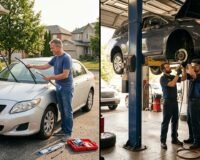
10 Common Car Problems which need Immediate Repair
Car Problems need Immediate Repair Your car plays an essential role in your daily life, whether you commute to work, run errands, travel with your family, or explore the roads around Sugar Land, TX. However, like every machine, your vehicle can develop mechanical and electrical problems over time. While some issues may seem minor initially, others can quickly become serious safety risks if ignored. 10 Common Car Problems which need Immediate Repair: Imagine noticing a strange engine noise, experiencing sudden brake problems, or seeing smoke coming from underneath your hood. Would you continue driving and hope the problem disappears? Unfortunately, delaying necessary repairs can lead to expensive mechanical damage, unexpected breakdowns, and dangerous driving conditions. Knowing which car problems require immediate professional attention can help you protect your vehicle, your passengers, and your budget. If you are searching for the Best auto repair shop in Sugar Land, understanding these warning signs is an excellent first step toward making informed vehicle maintenance decisions. In this guide, we will explore 10 common car problems that require immediate repair, explain their possible causes, and help you understand when professional automotive assistance is necessary. 1. Brake Failure or Unusual Brake Noises – Your vehicle’s braking system is one of its most important safety features. Any noticeable change in braking performance should be treated seriously. Common warning signs include: Grinding or squealing noises when applying the brakes. A soft or spongy brake pedal. Increased stopping distance. The vehicle pulling to one side while braking. Brake warning lights appearing on the dashboard. Brake pedal vibration or unusual movement. These symptoms may indicate worn brake pads, damaged rotors, leaking brake fluid, or problems with the braking system. Why does immediate repair matter? Faulty brakes can reduce your ability to stop safely and increase the risk of an accident. Continuing to drive with severely worn brake components may also damage other parts of the braking system. If you experience serious braking problems, stop driving when safe and arrange professional assistance. A reliable auto repair shop in Sugar Land can inspect your braking system, identify the underlying issue, and recommend the appropriate repair. 2. Engine Overheating – An overheating engine is another problem that should never be ignored. Your vehicle’s cooling system regulates engine temperature and prevents excessive heat from damaging internal components. When something goes wrong, your engine may become dangerously hot. Common causes of engine overheating include: Low coolant levels. Radiator leaks or damage. A malfunctioning thermostat. Water pump failure. Cooling fan problems. Damaged coolant hoses. You may notice the temperature gauge rising above its normal range, steam coming from under the hood, or a coolant temperature warning light. What should you do if your engine overheats? Safely pull over, turn off the engine, and allow it to cool. Never open the radiator cap while the engine is hot because pressurised coolant can cause severe burns. Contact a professional mechanic to inspect the cooling system. Ignoring overheating can cause severe engine damage, including a blown head gasket or warped cylinder head. Early diagnosis can help prevent more extensive repairs. 3. Engine Oil Leaks or Low Oil Pressure – Engine oil plays a critical role in lubricating moving components, reducing friction, and helping control engine temperature. When oil levels become too low or oil pressure drops, internal engine components may experience excessive friction and heat. Common warning signs include: Oil spots underneath your parked vehicle. An illuminated oil pressure warning light. Burning oil smells. Smoke coming from the engine area. Unusual ticking or knocking sounds. Frequently needing to add engine oil. Oil leaks may develop because of worn seals, damaged gaskets, loose drain plugs, or other engine-related problems. Why is immediate attention important? Insufficient lubrication can cause serious internal engine damage. If the oil pressure warning light comes on while driving, safely stop the vehicle and switch off the engine. Do not continue driving until the problem has been assessed. Professional inspection can help identify the leak, check oil pressure, and determine whether repairs are necessary. 4. Transmission Problems and Gear Slipping – Your transmission transfers engine power to the wheels and allows your vehicle to operate at different speeds. When transmission components develop problems, you may notice unusual behaviour while shifting gears or accelerating. Some common warning signs include: Delayed gear engagement. Sudden or rough gear changes. Grinding or whining noises. Transmission fluid leaks. Unexpected increases in engine RPM. Difficulty accelerating. Potential causes include low transmission fluid, contaminated fluid, damaged sensors, worn internal components, or other transmission-related issues. Transmission problems should be diagnosed promptly because continued operation under faulty conditions may cause additional damage. If your vehicle struggles to shift gears or suddenly loses power, avoid unnecessary driving and arrange a professional inspection. An experienced technician can evaluate the transmission system and recommend suitable repair or maintenance solutions. 5. Battery Failure and Electrical System Problems – A properly functioning electrical system is essential for starting your vehicle and operating important components such as headlights, dashboard displays, and electronic systems. Battery and electrical problems can develop gradually or occur unexpectedly. Watch for these warning signs: Slow engine cranking. Clicking sounds when starting the car. Dim headlights. Flickering dashboard lights. A battery warning light. Electrical accessories malfunctioning. Common causes include an aging battery, corroded battery terminals, alternator problems, damaged wiring, or a faulty starter motor. When should you seek professional repair? If your vehicle repeatedly struggles to start or electrical components stop working correctly, schedule an inspection. A technician can test the battery, alternator, starter, and charging system to identify the actual cause. Replacing a battery without checking the charging system may not solve the underlying issue. Proper diagnosis helps prevent repeated starting problems and unexpected breakdowns. 6. Steering Problems and Suspension Damage – Your steering and suspension systems help maintain vehicle stability, handling, and control. Problems with these components can make driving uncomfortable and potentially dangerous. Common symptoms include: Difficulty turning the steering wheel. Unusual clunking or knocking sounds. Excessive vehicle bouncing. Steering wheel vibrations. Uneven tire