If you’re searching for engine repair Sugar Land drivers can rely on, this guide covers what repairs typically cost, how to know which option fits your situation, what happens once you drop your car off, and how to choose a shop you can trust.
What Determines the Cost of Engine Repair?
No two engine repairs cost the same, and anyone who quotes you a number without inspecting the vehicle first is guessing. Several factors drive the final price:
- Make and model. Parts for a Honda Civic cost far less than parts for a European luxury sedan.
- Labor time. Some repairs take an hour; others require pulling the engine out entirely.
- Age and mileage. Older, high-mileage engines sometimes reveal additional wear once a technician gets inside.
- OEM vs. aftermarket parts. Genuine manufacturer parts cost more but often carry better warranties.
- Severity. A simple gasket replacement and a full internal rebuild are worlds apart in price.
Rather than guessing based on symptoms, the only reliable way to get an accurate number is a hands-on diagnostic. Ballpark ranges you’ll find online are a starting point for research, not a quote you should expect a shop to honor sight unseen.
Repair, Rebuild, or Replace? How to Decide
This is the question that actually matters once a mechanic tells you something serious is wrong internally. Here’s how the three options differ:
Repair makes sense when the problem is isolated, such as a single failed component like a water pump, a leaking gasket, or a faulty sensor. If the rest of the engine is healthy, fixing the specific part is the most cost-effective route.
Rebuild (sometimes called a reman, or remanufacture) means the engine is taken apart, worn components are replaced or machined back to spec, and it’s reassembled. This is usually the right call when internal wear is widespread, but the block itself is still structurally sound. It costs more than a single repair but significantly less than a full replacement.
Replace becomes the practical choice when the block is cracked, damage is too extensive to justify rebuilding, or rebuild labor would cost nearly as much as a replacement engine. Replacement engines can be new, remanufactured, or a quality used engine from a low-mileage donor vehicle.
A rough rule of thumb: if the repair cost is under 30-40% of your car’s value, repairing or rebuilding usually makes sense. Beyond that, weigh the cost of replacement, or even whether it’s time for a different vehicle. A trustworthy shop walks you through this math honestly instead of pushing the most expensive option by default.
What Different Engine Noises Actually Mean?
Not all engine noises point to the same problem, and knowing the difference can help you describe the issue accurately when you call for an appointment.
- Knocking or pinging under acceleration often points to detonation issues, sometimes caused by low-quality fuel, sometimes by a more serious internal problem like worn rod bearings.
- Ticking or tapping, especially right after startup, is frequently related to low oil pressure or valvetrain components like lifters.
- Whining or grinding is more often a belt, pulley, or accessory component issue rather than something internal to the engine itself.
- Hissing usually signals a vacuum or exhaust leak rather than a mechanical engine problem.
- Rattling on startup that fades can point to timing chain slack, which is worth having checked before it worsens.
Noise alone isn’t a diagnosis, but describing what you’re hearing, when it happens, and under what conditions helps a technician narrow things down faster once the car is on the lift.
What Happens When You Bring Your Car in for Engine Repair?
A lot of drivers put off car engine repair in Sugar Land shops could easily fix, simply because the process feels like a mystery. Here’s what a proper visit typically looks like:
- Initial conversation. You describe the symptoms: noises, warning lights, when the issue started, and any patterns you’ve noticed.
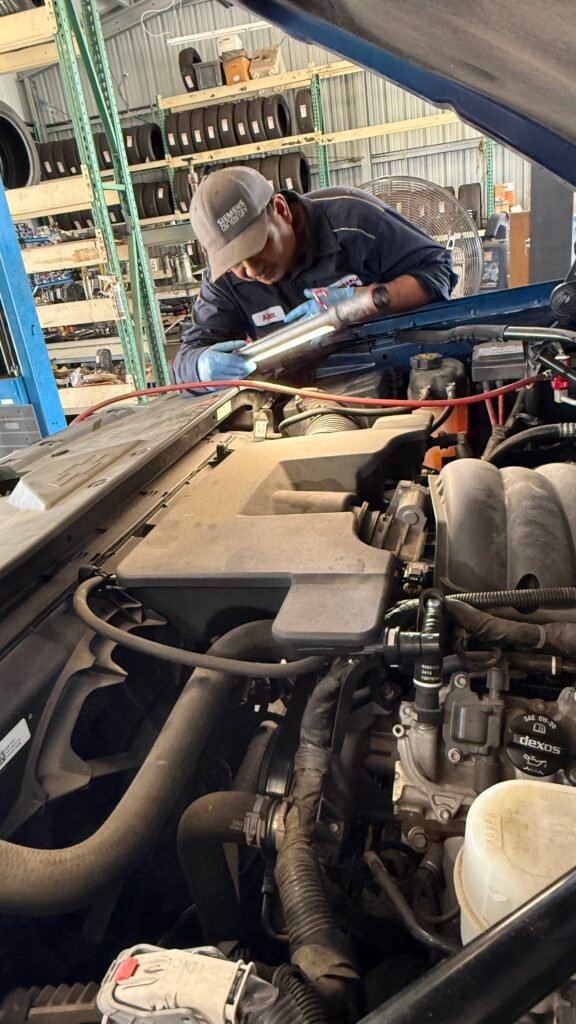
- Computer diagnostic scan. Technicians pull trouble codes from the vehicle’s onboard computer, which point toward, but don’t always confirm, the root cause.
- Physical inspection. This is where experience matters. A code might say “misfire,” but only a hands-on inspection reveals whether it’s a spark plug, a coil, a vacuum leak, or something deeper.
- Diagnosis and explanation. A good shop explains what’s actually wrong in plain language, along with the repair options and cost before any work begins.
- Repair work. Once you approve, the technician completes the repair, using OEM or quality aftermarket parts depending on what you’ve agreed to.
- Test drive and verification. The vehicle should be road-tested to confirm the original problem is resolved, not just that a warning light turned off.
If a shop skips straight from “check engine light is on” to a repair quote without a real inspection, that’s a red flag worth paying attention to.
Used, New, or Remanufactured: Choosing a Replacement Engine
When replacement is the right call, you generally have three options:
- New engine. Rare for most consumer repairs since manufacturers typically don’t sell bare new engines outside of specific programs. Highest cost, longest lifespan.
- Remanufactured engine. Rebuilt to factory specifications with new or reconditioned parts, often backed by a solid warranty. A strong middle ground choice for most drivers.
- Used engine. Pulled from another vehicle, usually the most affordable option. The key risk is unknown history: mileage, maintenance records, and prior damage aren’t always verifiable, so buying from a shop that tests and verifies used engines before installation matters.
For most drivers weighing cost against reliability, a remanufactured engine tends to offer the best balance, a warranty backing the investment without paying new-engine prices.
Why Local Drivers Choose Affordable Auto Care & Tires for Engine Work?
Engine repair isn’t something you want to hand off to just anyone. As one of the most trusted names for car engine repair in Sugar Land has to offer, Affordable Auto Care & Tires has built its reputation on honest diagnostics and quality repairs, not upselling. A few things worth checking before you commit:
- ASE-certified technicians with real experience on your specific make and model
- Transparent, written estimates before work begins, not verbal guesses
- Warranty coverage on both parts and labor
- Willingness to show you the problem, whether through photos, the old part, or a walkaround explanation
- Honest recommendations. A shop that tells you when a repair isn’t worth it is more trustworthy than one that always says “replace everything”
Daily stop-and-go traffic and long highway stretches put real strain on engines over time, which makes a shop that understands everyday driving conditions worth the extra consideration.
FAQ
How long does engine repair usually take?
It depends on the issue. A single-component repair, like a sensor or gasket, can often be done same-day. A rebuild or full replacement typically takes several days, since it involves disassembly, sourcing parts, reassembly, and a test drive before the car goes back to you.
Can I keep driving my car if the check engine light is on?
Sometimes, but it’s risky. A steady light usually means it’s safe to drive short distances to get it checked. A flashing light means stop driving immediately, since it often signals a misfire that can damage the catalytic converter if ignored.
Is it worth repairing an engine on an older, high-mileage car?
It depends on the car’s overall condition and how the repair cost compares to its value. If the rest of the vehicle is in good shape and the cost is reasonable relative to what the car is worth, repairing often makes more sense than replacing the vehicle entirely.
How often should I get my engine inspected to avoid major repairs?
Routine oil changes and maintenance visits usually catch small issues before they become expensive ones. Beyond that, any new noise, smell, or warning light is worth checking promptly rather than waiting for the next routine visit.