Wondering what does an air filter do in a car? Your vehicle has hundreds of moving parts, and most of them get plenty of attention — oil, tires, brakes. But the humble air filter? It usually gets ignored until something goes wrong.
Here’s the thing: your engine can’t run without air. And not just any air – clean air. The air filter is what stands between your engine and every bit of road dust, pollen, and debris swirling around outside your car. Get it wrong, and you’re looking at poor performance, a glowing check engine light, or worse, expensive engine damage.
The air filter cleans the air entering your engine before combustion. A clogged filter leads to reduced power, poor fuel economy, dirty spark plugs and left too long – serious engine damage. Most filters should be replaced every 12,000–15,000 miles or once a year.
What an Air Filter Actually Does
Think of your car’s engine like a person running a marathon. Just like you need clean, steady breaths to perform your best, your engine needs a consistent supply of clean air to generate power efficiently.
An engine air filter’s job is straightforward: it catches dust, dirt, sand, and other airborne debris before they can enter the engine and damage internal parts. Without it, every tiny particle swirling in the air — including things as fine as a grain of salt — would go straight into your engine.
How the Car Air Filtration System Works
Air enters your vehicle through the intake system, flows through the air filter (housed in an airbox under the hood), and then travels into the combustion chamber where it mixes with fuel. This system includes the air filter, airbox, and intake manifold — all working together to deliver clean air to the engine.
The filter itself is made of pleated fibrous material — paper, foam, or cotton — specifically designed to trap particles while still allowing enough airflow for the engine to breathe freely.
The Air-to-Fuel Ratio — Why Clean Air Is Everything
Here’s something most people don’t realize: for every gallon of fuel your engine burns, roughly 10,400 gallons of air flow through the filter. That’s an enormous amount of air passing through a single component every time you drive.
A clean air filter maintains the correct fuel-air balance, allowing your engine to run smoothly. A dirty one forces the engine to work harder, which affects performance and efficiency.The combustion process simply can’t function properly without the right mixture of clean air and fuel.
Engine Air Filter vs. Cabin Air Filter — Know the Difference
A lot of car owners mix these two up. They sound similar, but they serve completely different purposes. Your vehicle actually has two air filters, and both matter.
What Does the Engine Air Filter Do?
The engine air filter cleans the air entering the engine before combustion, ensuring that the air helping the fuel ignite is free of particulates that could cause longer-term damage.
It lives in the engine bay — usually in a rectangular or round housing that’s easy to access. This is the filter that directly protects your pistons, cylinder walls, valves, and other engine internals from abrasive particles.
What Does the Cabin Air Filter Do?
The cabin air filter works to prevent dust, pollen, dirt, and other pollutants from entering the cabin through your A/C and heat vents. It’s the one protecting you — not the engine.
You’ll find the cabin air filter behind the dashboard or near the glove compartment. It traps bugs, tiny dirt particles, pollen, and other air pollutants before they circulate inside the car. If you have allergies or asthma, this filter is especially important.
Bottom line: the engine air filter protects your car. The cabin air filter protects you. Both need regular attention.
What Happens When Your Air Filter Gets Dirty?
Let’s be honest — this is where things get real. Ignoring a dirty air filter isn’t just an inconvenience. Over time, it can cause a chain reaction of problems that gets expensive fast.
Performance Problems You’ll Feel
A clogged engine air filter reduces engine power, decreases throttle response, weakens acceleration, and increases engine wear.
Imagine you’re merging onto a highway and press the gas — and the car feels sluggish, almost reluctant to respond. That’s often a clogged air filter at work. The engine isn’t getting enough clean air to generate the power you’re asking for.
A dirty or damaged air filter changes the car’s air-fuel balance, which can pollute spark plugs, cause the engine to miss or idle roughly, and trigger the check engine light to come on. Champion Auto Parts
On top of that, a clogged air filter is believed to reduce gas mileage by as much as 10% in some cases — meaning you’re paying more at the pump for no good reason.
Warning Signs You Shouldn’t Ignore
- Check Engine Light — the mass airflow sensor can detect lower levels of air entering the intake than normal, and when combined with oxygen sensor readings showing poor combustion, it can trigger the check engine light.
- Black smoke from the exhaust — black smoke from the tailpipe signals a fuel mixture that’s too rich, meaning there’s too much fuel relative to air — a classic sign of a blocked filter.
- Sluggish acceleration — your car hesitates or stumbles when you press the gas
- Strange engine noises — coughing, popping, or rough idling
- Fuel smell from the exhaust — unburned fuel exiting through the tailpipe
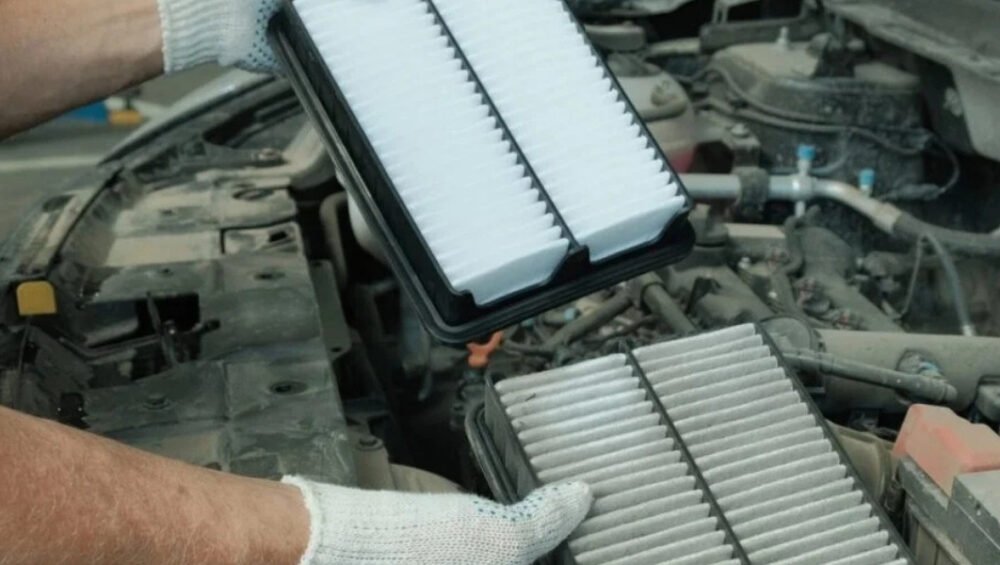
- Visually dirty filter — brand new filters appear nearly white; over time they turn brown or black as contaminants accumulate.
Driving too long with a clogged air filter can also cause carbon deposits on spark plugs, and in worst-case scenarios, allow dirt and particulates to enter the engine itself – causing substantial wear and tear over time.
How Often Should You Replace Your Car’s Air Filter?
This is one of the most common questions, and the answer is simpler than you’d think.
Standard Replacement Intervals
Most manufacturers recommend replacing your air filter at least every 12,000 to 15,000 miles — or roughly every three oil changes — though your owner’s manual will give you the exact interval for your specific vehicle. As a general rule, plan to have it inspected at least once a year. If the filter is clogged with dirt, insects, leaves, or other debris, it’s time for a new one. Fanning the pleats with your hand and seeing dirt fly off is a clear sign it needs replacing.
When to Replace It Sooner
Not all driving conditions are equal. If you spend a lot of time driving on unpaved roads, in desert areas, or in large cities with heavy diesel truck traffic and industrial pollution, you may need to change your filter more frequently.
Here’s a simple checklist of when to replace sooner than the standard interval:
- You drive on dirt or gravel roads regularly
- You live in a dusty, arid, or heavily industrial area
- Your area experiences high pollen seasons
- You rack up miles quickly (frequent long-distance drivers)
- Your car has been sitting for an extended period
The good news is that most engine air filters are quite cost-effective, averaging $20 to $25, and the replacement takes only a few minutes. It’s one of the cheapest maintenance tasks you can do with one of the biggest payoffs.
Types of Car Air Filters
Not all air filters are built the same. Depending on your vehicle and driving habits, one type may suit you better than another.
Paper, Foam, and Cotton Filters
- Paper (Disposable): Paper air filters are made from pleated paper and are designed to be disposable. They are effective for everyday use and are the most cost-effective option for most drivers. This is what most cars come with from the factory.
- Foam: Foam filters are often used in off-road vehicles due to their superior ability to trap dirt, and they can sometimes be cleaned and reused — making them a more durable choice for rough conditions.
- Cotton (Performance): High-performance vehicles often use cotton air filters Auto Excel, which allow higher airflow for more power. However, keep in mind that high-performance filters may trap less dust and dirt than standard filters, and oiled performance filters can sometimes contaminate mass airflow sensors if over-oiled.
For everyday commuting, a quality OEM paper filter is the smart, reliable choice.
Can You Replace a Car Air Filter Yourself?
The short answer: sometimes yes, sometimes it’s better to let a pro handle it.
DIY vs. Professional Replacement
Replacing an air filter is one of the more beginner-friendly DIY car maintenance tasks. The filter typically resides in a rectangular housing in the engine bay that’s easily accessible. Most replacements take less than 15 minutes and require no special tools — just remove the old filter and install the new one in the same orientation.
However, there’s a catch. More and more vehicle manufacturers are placing air filters in trickier, hard-to-access locations for design and space efficiency, which can turn a simple job into a frustrating one.
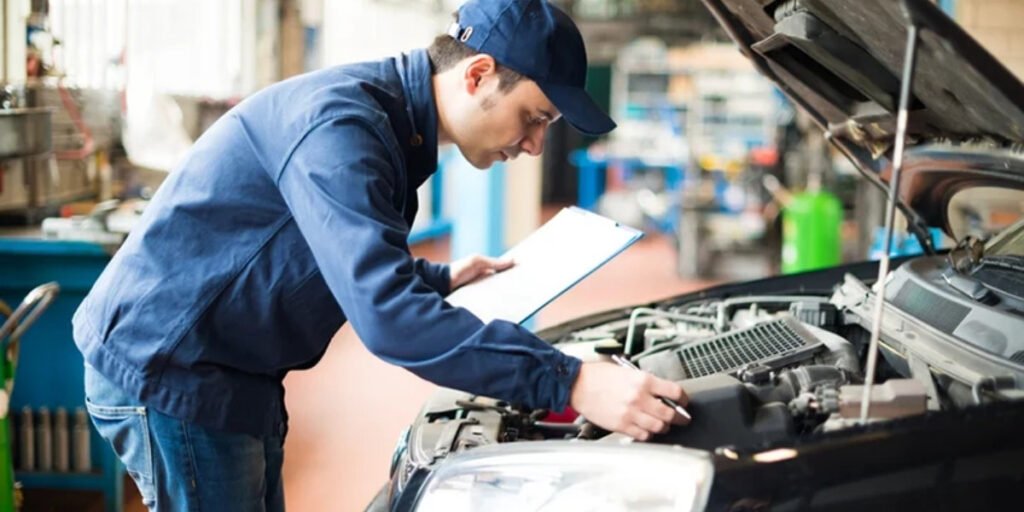
If you’re not sure where your filter is, or if you want it checked as part of a broader inspection, bringing it to a trusted technician is always a smart move. A certified technician can also inspect your mass airflow sensor, spark plugs, and overall intake system while they’re at it — catching problems early before they become expensive.
Car Air Filter Replacement Near Me — Why Choose Affordable Auto Care & Tire
If you’re searching for car air filter replacement near me, you want a shop that does the job right the first time – without unnecessary upsells or long waits.
At Affordable Auto Care & Tire, our certified technicians inspect your engine air filter and cabin air filter as part of every routine service visit. We use quality OEM-compatible filters matched to your specific vehicle’s make and model, whether you’re driving a Toyota Camry, Honda CR-V, Ford F-150, or anything in between.
Here’s what you get when you choose us:
- Transparent pricing — no surprises, no hidden fees
- Fast turnaround — most filter replacements completed while you wait
- Full inspection — we check the condition of your intake system, not just swap the part
- Trusted technicians — experienced, honest and focused on your car’s long-term health
Whether your check engine light is on, your car feels sluggish, or you simply can’t remember the last time the filter was changed — we’re here to help. Don’t wait for a small part to turn into a big repair bill.
Final Thoughts — Don’t Let a $20 Part Become a $2,000 Problem
Your car’s air filter is one of those parts that’s easy to forget about — until it becomes impossible to ignore. The symptoms sneak up on you: a little sluggishness here, slightly worse gas mileage there, and then one day a check engine light that sends your stomach sinking.
The fix is usually simple and inexpensive. A fresh air filter costs a fraction of what engine repairs cost, and swapping it out takes minutes. The hard part is just remembering to do it.
If you can’t remember the last time your air filter was checked, that’s your sign. Reach out to Affordable Auto Care & Tire today for a quick inspection. We’ll check your engine air filter, your cabin air filter, and your overall air intake system — and give you a straight answer on what your car needs. No pressure, no upsells, just honest service from people who know cars.
Schedule your visit at Affordable Auto Care & Tire – your trusted choice for car air filter replacement in Sugar Land, TX.
FAQ: About Car Air Filters
What does an air filter do in a car, exactly?
A car air filter acts as a guardian between your engine and the outside world. It traps harmful contaminants like dust, dirt, pollen, and microscopic debris before they can enter the engine Segalcorp, protecting critical components like pistons, cylinders, and valves from abrasive wear.
How do I know if my car air filter needs to be replaced?
The most obvious signs include reduced acceleration, rough idling, a check engine light, black smoke from the exhaust, or a gasoline smell. You can also do a quick visual check — a new filter is nearly white, while a dirty one turns brown or black as contaminants build up. When in doubt, have a mechanic inspect it.
How often should I replace my car’s air filter?
Air filters typically last about 30,000 miles under normal driving conditions, but if you drive in a hot, dusty, or heavily polluted area, you may need replacement every 15,000 miles. Valvoline Instant Oil Change
Check your owner’s manual for the manufacturer’s specific recommendation for your vehicle.
Can a dirty air filter damage my engine?
Yes — and more seriously than most people expect. In worst-case scenarios, a very dirty air filter allows dirt and particulates into the engine, causing substantial wear and tear over time, and can also damage spark plugs through excess unburned fuel buildup. Catching it early with a simple, inexpensive replacement prevents far costlier repairs.
What’s the difference between an engine air filter and a cabin air filter?
They’re two separate filters with two separate jobs. The engine air filter cleans the air entering your engine before combustion. The cabin air filter cleans the air entering your car’s interior, trapping dust, pollen, mold spores, and exhaust fumes to keep the air you breathe inside the car cleaner.
Will replacing my air filter improve my gas mileage?
It can, especially in older vehicles. Replacing a clogged engine air filter can improve gas mileage by as much as 10% in some cases. In newer vehicles with electronic fuel injection, the improvement may show more in performance than in MPG — but either way, a clean filter means your engine isn’t working harder than it has to.